Search intent: what is it and how do you find it?
 Joram BoonSEO and content specialist
14 February 2024 · updated 7 February 2024
Search intent is the goal someone has when they type a query into a search engine.
Whether they're looking for information, a specific website, a product to buy, or a local service, every search carries an intent with it. And it's up to you, or an SEO specialist, to create content that matches that intent!
In this blog we'll go through the different types of search intent one by one: informational, navigational, commercial, local and transactional. Each type has its own characteristics and calls for a unique approach to content creation.
And how do you figure out the search intent of your target audience, and how do you optimise your website for it? That's what we'll find out. Keep reading, because this is the knowledge that can push your online store or website to the top of the search results!
In short...
- Search intent is the underlying goal a user has with their keyword.
- Search intent is an important factor for search engines when compiling their results, understand search intent and you'll rank better!
- You have informational, navigational, commercial, local and transactional search intent, and each form has its own traits and its own types of content.
- You can easily work out the search intent by looking at the search results, the "people also ask" section and the related searches for your target keyword.
- You can fix keywords with dual search intent by focusing on one search intent and tailoring your content to it!
Why does search intent matter? And what effect does it have on SEO?
Understanding search intent is critical for SEO and for customer satisfaction. Here's why! By actively focusing on search intent and applying it in your content, you give the visitor exactly what they're looking for.
If visitors stay on your page for a long time without going back to the search results, search engines read this as a sign of high relevance and value. This positive signal can lead to a better ranking in the search results.
After all, the goal of search engines is to help users as well as possible! If your content keeps satisfying visitors' search intent, it's almost inevitable that your content will climb higher in the rankings (SERPs)
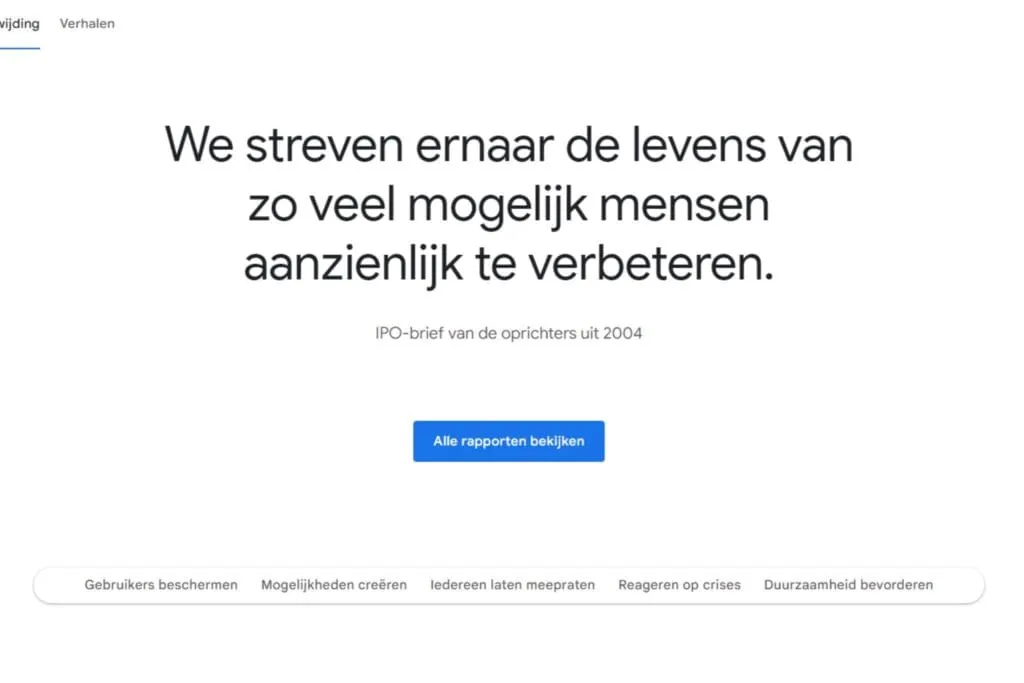
Take Google's own mission statement, for example: 'we aim to significantly improve the lives of as many people as possible'. If your website keeps making people's lives a little easier, Google will reward you for it!
A few reasons you should use search intent:
- Higher user satisfaction: By tapping into search intent, you improve the user experience. Visitors quickly find what they need, which builds satisfaction and trust in your brand.
- Lower bounce rates: If your content matches what the searcher wants, they stay on your page longer. That lowers your bounce rate, an important factor for search engines when ranking your website.
- Higher conversions: For commercial searches, content aimed at the search intent can lead to more sales or leads, because it gives the user exactly what they're looking for.
- Targeted keywords: Understanding search intent helps you pick the right keywords, which brings more qualified traffic to your site and increases the chance of conversion too!
- Better resilience to algorithm updates: Search engine algorithms are getting better and better at interpreting search intent. Sites that serve that intent well are more resilient to changes in these algorithms.
In short, optimising your website and content for search intent isn't just important for a better position in search engines, it also improves the overall experience of your (potential) customers and contributes to the success of your online business.
So by focusing on search intent, you increase the odds that your website gets found by the right people, at the right moment, with the right message.
Types of search intent
Every search intent represents a unique need or question from the user, and recognising it can shape your SEO strategy and make it a lot more effective.
Below we'll dig deeper into the different types of search intent and the type of content that goes with each!
Informational search intent
Informational search intent is when users are looking for specific information or answers to questions.
This can range from general knowledge questions to detailed instructions or explanations.
The content that fits here is (news) articles, blogs, how-to guides, FAQ pages, and anything that provides informational content.
For example: keywords such as "what is SEO" or "what is link building" fit this category.
Informational search intent makes up the largest share of total search volume online, so it matters a lot!

Navigational search intent
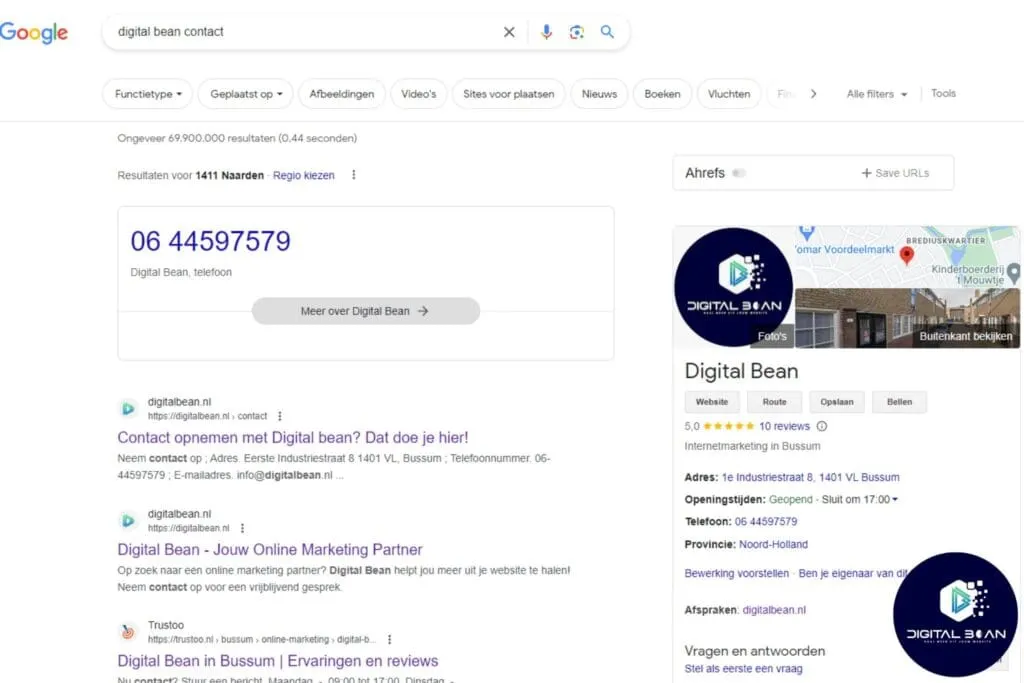
Navigational search intent points to situations where users are trying to find a specific website or page.
They often already have a brand, website or specific page in mind.
Content that fits here includes brand-specific landing pages and directory-style pages such as login pages.
Examples of keywords are "Digital Bean contact page" or "Facebook login".
Commercial search intent
With commercial search intent, users are interested in a product or service, but they're still researching and comparing before buying.
Content that fits here includes comparison guides, reviews and product descriptions.
Keywords in this category could be "best SEO tools 2024" or "Digital Bean reviews".

Local search intent
Local search intent refers to searches aimed at finding local services, shops or locations.
This includes content such as local business listings, maps, and local service pages.
Think of keywords such as "SEO specialists in Bussum" or "hairdresser Hilversum".
Local search intent is often a mix of commercial and transactional search intent.

Transactional search intent
With transactional search intent, users intend to make a purchase or complete some other kind of transaction.
The content that fits here includes e-commerce category/product pages, service pages/landing pages and sign-up forms.
Keywords such as "outsourcing SEA" or "buy nike shoes" are typical examples.
This is where the money is REALLY made, these are your money maker pages!
But as you might guess, they're also often highly competitive.
But with a good SEO strategy this is definitely achievable!

How do you find the search intent?
To work out the search intent behind specific keywords, it helps to take a strategic approach.
This process involves analysing several aspects of searches and search results.
Here are a few effective methods:
Look at the search results (SERP)
Start by looking at the first page of Google's search results for the keyword in question.
Pay attention to the type of content that appears: is it mostly informational articles, product pages, or local listings?
This content reflects the primary intent that Google identifies for that keyword.
But sometimes you'll find that there are two types of search intent, as shown in the image below!
The keyword 'cake' has both informational and transactional search intent, tricky!
More on how to handle two search intents shortly…

Look at the 'People also ask' section
Google's "People also ask" section (see the image) is a goldmine for understanding related questions and concerns from users.
These questions give insight into how the user searches and what else the user might be looking for.
You can use this for inspiration for your content and easily work out the search intent!

Look at suggestions / related searches
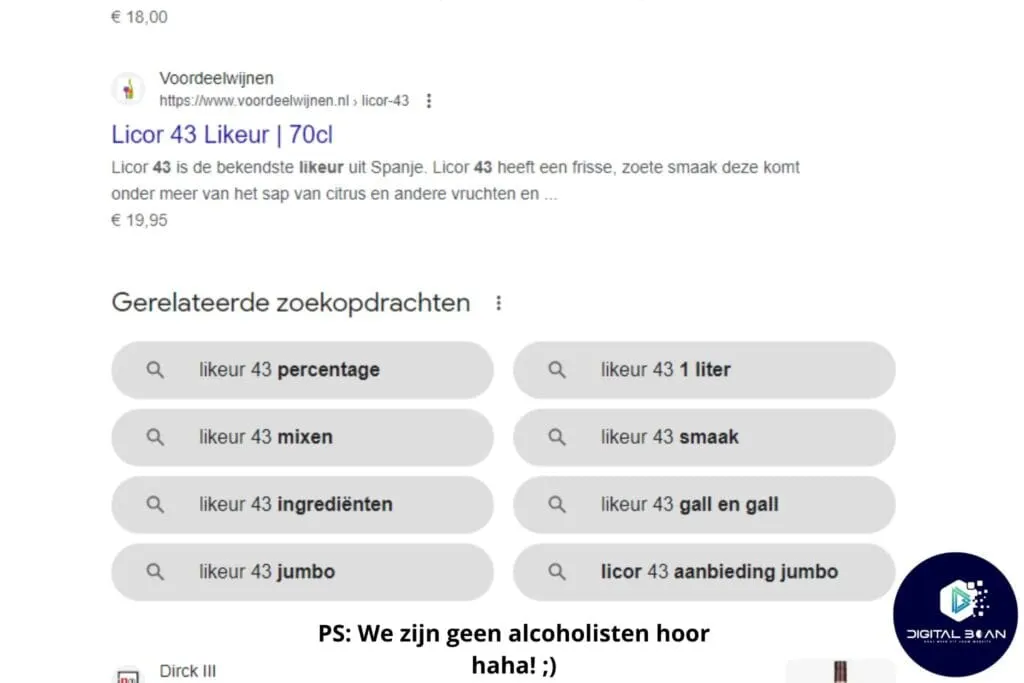
Paying attention to Google's autocomplete suggestions and the "Related searches" section can help identify related search terms and topics.
This can give you valuable clues about what users might also be searching for or considering in relation to the primary keyword.
If we search for nike shoes and scroll down, you'll see a whole range of terms you can use in the related searches.
Analyse the content format and style
Look at the format and style of the top-ranking pages.
Are they lists, in-depth guides, videos, product reviews, or FAQ pages?
This can indicate which type of content best matches the search intent and help you decide what kind of content you should create.
Use SEO tools for intent analysis
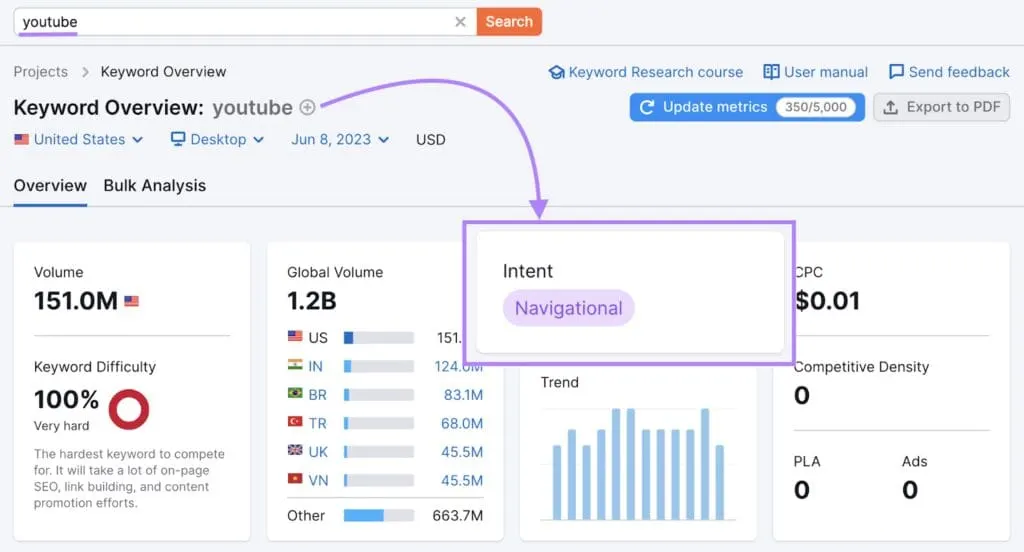
Use dedicated SEO tools such as SEMrush to get insight into search intent.
These tools can help you analyse the context of keywords, offer suggestions for related searches, and give insight into search volume and competition.
Semrush also has a built-in search intent feature that lets you skip all the steps above! Check out the screenshot for an example!
Research social media and forums
Search for discussions about the keyword / topic on social media platforms and forums such as Reddit, Quora or industry-specific forums.
This can give you insight into how people talk about, and search for, information related to the keyword.
This also helps you understand your target audience better, because you learn how they talk to each other and how they phrase questions, something you as a creative writer can easily use to your advantage!
You could think of it as a bit of a 'Trojan horse technique'!

Summary
Here's a quick overview of the steps you can follow to work out the search intent:
- Analyse the search results (SERP): look at the types of content that rank highly for your keyword.
- Check 'People also ask': find related questions users are asking.
- Check suggestions / related searches: pay attention to additional search terms and topics that appear.
- Analyse the content format and style: study the format and style of top-ranking content.
- Use SEO tools for intent analysis: use advanced SEO tools for deeper insight.
- Look at the ad formats in the SERP: identify the nature of the ads being shown.
- Research social media and forums: look for discussions about the keyword outside of search engines. The 'Trojan horse technique' 😉
Together, these steps give you a clear picture of the search intent, which matters for aligning your content strategy and SEO strategy. With thorough research and analysis you can create content that closely matches your target audience's needs, content they'll devour.
What if a keyword has two search intents?
Google has an extensive document, 168 pages!, (see it here) about how they assess content and how they judge search intent. But to keep it simple, here's a similar example that's also given in the document…
Imagine someone types "Apple" into Google. One person is interested in how Apple's shares are doing, another wants information about the latest iPhone, and yet another just wants to browse Apple's product range.
How do you handle this? Very simple… FOCUS!
Decide which meaning of "apple" is most relevant to your website and build your content around that!
Google also knows there are different intents, so it will show different results that satisfy all the intents behind the keyword so that every user is happy.
You might not always land in position #1, but you can still make the top 10 because you satisfy one search intent and so give a share of users exactly what they're looking for.

Conclusion
In this article we've explored search intent and its critical importance in the world of SEO. Search intent isn't just a buzzword, it's a fundamental element for anyone who wants to maximise their website and online visibility.
We've covered the different types of search intent:
- Informational search intent – where users are looking for information.
- Navigational search intent – where users want to find a specific website or page.
- Commercial search intent – where users are researching products or services for a future purchase.
- Local search intent – where users are looking for local information or services.
- Transactional search intent – where users are ready to make a purchase.
We've also covered strategies for working out search intent, such as analysing SERPs, 'people also ask' sections and related searches.
It's important to remember that keywords can have multiple search intents. The key then is to focus your content on ONE search intent to meet that specific need.
Need help?
At Digital Bean, we're ready to help you navigate the complex world of search intent and SEO. Our expertise and experience make sure your website isn't just findable, but also stays relevant to your target audience.
Got any questions, or want to share your own knowledge and experience? We'd love to hear it! Leave a comment below!
Share this blog too if it helped you, if not, well, that's fine too!
Good luck, and maybe soon we'll be talking about your #1 ranking on Google
Until next time…