What Is SEA? Launch Your Growth Without Spending a Penny – The Definitive Guide!
 Matthijs BoonFounder and online marketer
22 November 2023 · updated 10 September 2026
Imagine flipping a switch and suddenly customers start flooding to your website. That's SEA.
SEA stands for Search Engine Advertising. It's like having a megaphone in the digital world, putting your message directly in front of your ideal customer. Paid, targeted and unmistakably effective.
In a world where every click can lead to a conversion, SEA is the fast lane to visibility. It's the strategy you use when you don't just want to be found, but chosen.
And in today's digital marketing, where attention is the scarcest currency of all, SEA is your best investment.
SEO is the marathon, steady and long-term. SEA? That's the sprint. Where SEO takes time to build, SEA gives you instant results. Combine the two, and you've got a winning formula.
So if you're ready to put your business in the spotlight, it's time to embrace SEA. It's time to take control of how and when you show up in the search results.
After years of working (and still working) as an SEA specialist with great clients and fun projects, I want to help you today with the basics of SEA: what kind of online marketing channel SEA actually is, what falls under it, where you can run SEA, and the different ways you can use it.
In Short
- Definition of SEA: SEA stands for Search Engine Advertising, a paid and targeted way of advertising on search engines.
- Instant Results: Unlike SEO, which takes time to build, SEA delivers immediate visibility and results.
- Importance in Digital Marketing: SEA plays a key role in digital marketing where attention is scarce, and is seen as a valuable investment.
- Different Ad Formats: SEA includes various types of ads such as text, display, shopping and video ads, each with its own advantages.
- Keyword Research: A core part of SEA, where using the right keywords ensures effective targeting and better campaign results.
- Cost Control: SEA uses a Pay-Per-Click (PPC) model, where costs are optimised by only paying for actual clicks.
- Setting Up a Campaign: The process of setting up an SEA campaign includes creating an account, setting up conversions, choosing the right campaign type, and testing and optimising ads.
- Common Mistakes: The article highlights the importance of avoiding common mistakes such as a poorly configured conversion tag, advertising too broadly, unrealistic expectations and ignoring negative keywords.
The Basics of SEA: An Overview
Step into the world of SEA, where every click can open a new horizon. Search engine ads aren't just adverts; they're your digital shop signs, visible to millions of eyes, aimed at the people already searching for what you offer.
How do search engine ads work?
It's simple. When someone runs a search, your ad appears at the top of the results. It's like standing at the front of the longest queue in the world – without pushing in.
The role of Pay-Per-Click (PPC) in SEA
With PPC you only pay when someone clicks. It's like a coffee bar where you only pay for the coffee that's actually drunk. No waste. Just pure value.

Introduction to Google Ads as an SEA platform
Then there's Google Ads. This platform is your toolbox for SEA. Here you can fine-tune your message, manage your budget and measure your results. It's like being the pilot of your own marketing plane.
Besides Google, there are other search engines where you can advertise. Think of Microsoft's Bing, but also YouTube (yes, that's a major search engine too) is a place where you can run ads.
Ready to unleash the power of SEA? Every click (and every visitor) is waiting for you. Take control, get started with Google Ads, and watch your business grow.
Types of SEA and Their Applications
In the digital sea of possibilities, SEA is your periscope, helping you rise above the competition.
Every ad type has its own magic, its own way of putting your message in the spotlight.
From the concise power of text to the visual appeal of images, SEA offers a whole spectrum of options. But let's start at the beginning, with the basics that lay the foundation for online success.
In short, these are the types of SEA ads:
- Text ads
- Display ads
- Shopping ads
- Video ads
Text ads: the classic approach
Picture this: your ad at the top of Google, right when someone searches for what you offer. That's the power of text ads.
They're simple, but oh so powerful. With just a few lines of text, you can grab the attention of potential customers. And the best part? You only pay when they click. Sounds good, right?
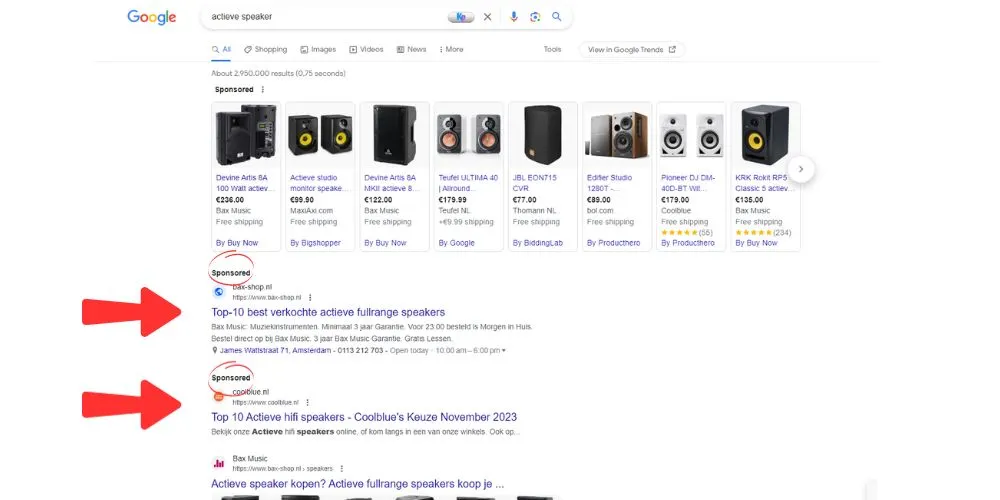
Text ads look just like regular search results, but you can spot them by the sponsored tag above the ad.
Text ads are usually the first few search results and the last few results on the page.
Below you'll find some examples of text ads.
Display ads: visual and appealing
Scrolling through the internet is like walking through a gallery. Display ads are the artworks that catch your eye.
They're colourful, dynamic, and they can tell your brand story with a single image or animation.
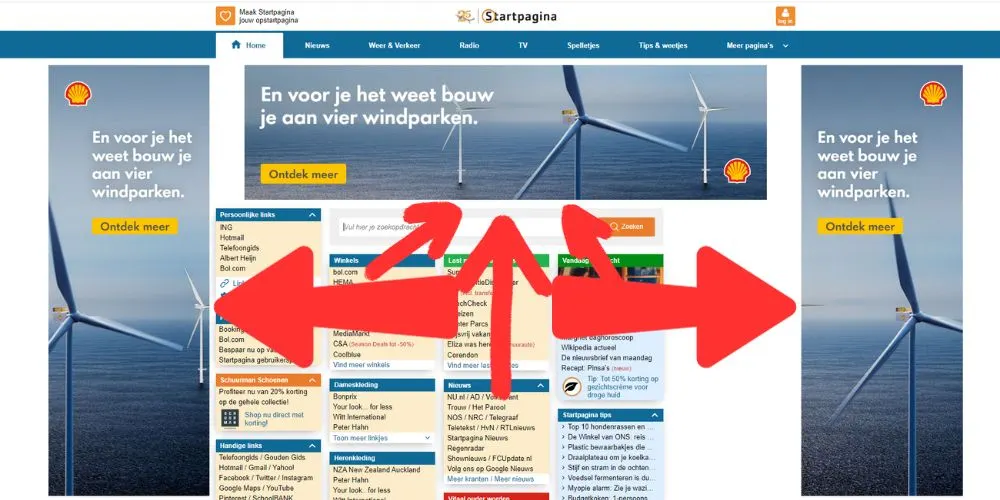
They appear on websites, in apps, and even in emails. And they're impossible to miss.
Below is an example of a display ad:
Shopping ads: direct product promotion
Shop online? Then you'll know shopping ads. They show your product, price and a photo, right in the search results.
For online stores, they're worth their weight in gold. They attract buyers who are ready to reach for their wallet. And they make it easy to compare, which customers love.
It's also great that searchers can see the price and image straight away. So if they don't like the look of it, or they think the product is too expensive, they simply won't click (and even more importantly, you won't have to pay).
You'll find shopping ads at the top of the search results or along the right-hand side.
Below are examples of what shopping ads look like and where you'll find them:


Video ads: interactive and engaging
Videos are everywhere. On YouTube, Facebook, even on news websites. Video ads grab attention and hold onto it.
They can inform, entertain and inspire. In just a few seconds, they can tell a story that sticks.
And with the right call to action, they can turn viewers into customers.
On YouTube you'll see these ads before a video actually starts playing, and on websites for example, you'll simply find them sitting between the content.
Examples of video ads on YouTube and on websites:


Keyword Research: The Basis of Effective SEA
Imagine you've set up the perfect shop. But what if nobody knows you exist? That's where keyword research comes in. It's the signpost that leads customers to your digital door.
The importance of keywords in SEA
Keywords are like GPS coordinates for your SEA campaigns. They connect your customers' questions with your answers, services and products.
Without the right keywords, you're invisible. With the right ones, you're everywhere.
Tools and techniques for keyword research
Now you're wondering: “How do I find those magic words?” Simple. Use tools such as Keyword Finder. It's like a treasure map, and I'll show you how to read it.
Long-tail vs. short-tail keywords
Short-tail keywords are broad. They're the ocean. Think of keywords like “SEO” or “SEA”. These are the most generic searches you can think of. They often carry a lot of search volume (how often people search for them), though.
Long-tail keywords are specific. They're your fishing rod. Think of keywords like “outsource SEO in Bussum” or “outsource SEA in Bussum”. Here, the searcher already knows they want to outsource SEA and is looking for an agency near them, in this case in Bussum. Very specific, in other words.
In the sea of SEA, long-tail is where you catch the best fish. Why? Because you're offering exactly what people are searching for. Plus, these people are already further along in the buying process. They already have a clearer idea of what they want, so the chances are higher that they'll order or convert.
Is keyword research still important for SEA?
Clients sometimes ask me whether keyword research is still that important when setting up a successful SEA campaign.
You might think keyword research is no longer necessary for setting up a Google Ads campaign, given all the innovations Google has made in recent years around automation and machine learning.
Keyword research is still important for understanding your audience's search behaviour. It helps you structure your website better and, in turn, boost the performance of your SEA campaigns.
Cost Control in SEA: CPC and Ad Budget
Imagine holding the key to a treasure chest. Every time you open it, it costs you a little, but what you get back can be worth far more. That's the principle behind Cost Per Click (CPC) in SEA.
Setting an effective ad budget
Now, how much are you willing to pay for each click? That depends on your budget. But not just any budget. An effective budget. This isn't a game of ‘guess and hope’. It's a strategic game of chess where every move counts.
Tips for cost optimisation in SEA
- Know your numbers. What's a customer worth to you? Work backwards and determine your maximum CPC.
- Start small. Test the water before you dive in. Start with a modest budget. You can always increase it later.
- Keep optimising. The best SEA campaigns are never static. They evolve.
- Use smart bidding strategies. Automation is your friend. Let algorithms bid on your behalf. That said, I'd start out manually to keep a firm grip on things, and switch to smart bidding once you have more data.
- Learn from your data. Every click tells a story. Listen and adjust.
Every penny in SEA should work like a seed you plant. With the right care and strategy, it can grow into a tree of profit.
And that's what we do at Digital Bean: we help you plant seeds in the fertile ground of the internet. Ready to grow? Get in touch and let us be your gardener in the world of SEA.
Setting Up an SEA Campaign: Step by Step
1. Creating an account / account settings
Start here. Creating an SEA account is like discovering a new world. One where your business can shine.
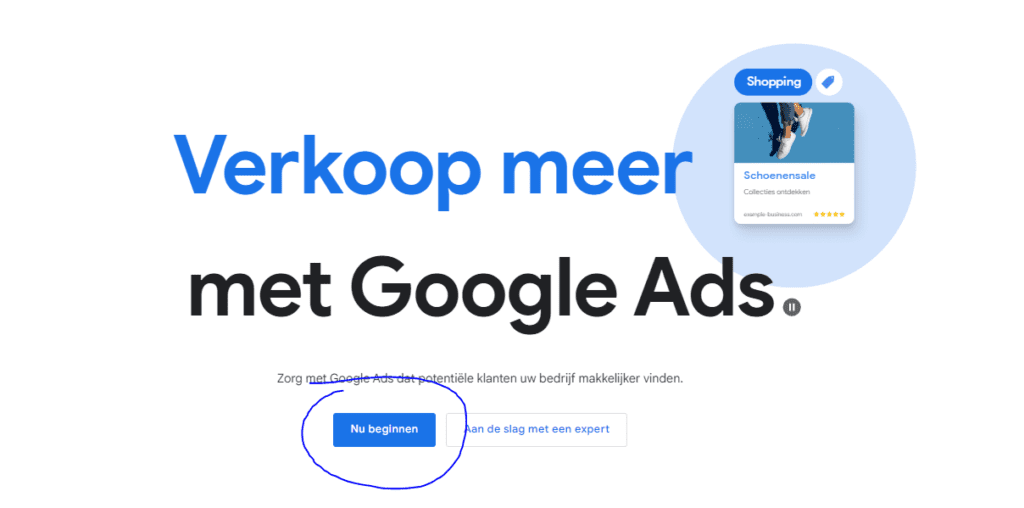
- Go to Google Ads.
- Click ‘Start now’.
- Enter your email address.
- Choose your business name.
It's that simple. But wait, there's more. The settings are the backbone of your campaign. Time zone. Currency. They need to be right. Make sure you get this right, because changing it later is a headache you don't want.
2. Setting up conversions
What do you want to achieve? More sales? Sign-ups? Downloads? Set up your conversions. This is your compass. It tells you whether you're heading the right way. Without it, you're sailing blind. And you don't want that.
3. Choosing a campaign type
The goal determines the path. Want to sell directly? Choose ‘Sales’. Collecting leads? ‘Leads’ is your friend. Brand awareness? ‘Brand awareness and reach’. Every choice forms the basis of your strategy. Choose wisely.
Which campaign type you choose matters too. Shopping works well for online stores, but that requires a feed. And that feed can do more than Shopping alone: you can also use the custom labels from that feed in ChatGPT Ads.
Text ads can work in any sector, and video and/or display campaigns can work well if you want to build more brand awareness.
So take a good look at what strategy works best for you.
4. Starting slowly and testing
Make haste slowly. Don't put all your money on one horse. Start small. A limited budget. A few ads. Test the water. What works? What doesn't? Analyse. Learn. This is the key to (sustainable) growth.
5. Optimising and adjusting
The magic is in the improvement. Look at the data. What are the numbers telling you? Adjust. Refine. Optimise. This isn't a one-off task. It's an ongoing process. And it can be the difference between profit and loss.
Common Mistakes in SEA and How to Avoid Them
Step into the world of SEA and you step into a world full of opportunities. But watch out, it's also a minefield of mistakes that can cost you valuable time and money.
Let's take a closer look at those pitfalls, so you can avoid them.

1. No properly configured conversion tag
You've got an ad generating clicks? Great. But what if you don't know which clicks lead to sales?
That's like a captain sailing without a compass. Make sure your conversion tags are set up correctly. It's the only way to see which ads are worth their weight in gold and which ones are eating up your budget.
2. Advertising too broadly at the start
It's tempting to cast your net wide, but in SEA, precision is king. Start small. Target a specific audience and get to know them first.
That way you don't waste budget on the masses, but invest in the people who are genuinely interested.
3. Unrealistic expectations
SEA is powerful, but it's not a magic wand. Building a successful campaign takes time. Be patient and set realistic goals.
If you expect to get rich overnight, brace yourself for disappointment. But if you're willing to learn and optimise, the sky's the limit.
4. Neglecting negative keywords
Now, don't forget the other side of the coin: negative keywords. They're like the unsung heroes of your SEA strategy.
By specifying what you don't want, you save money and improve the relevance of your campaigns.
It's like saying ‘no’ to unwanted guests at your party. And believe me, you don't want to pay for guests who'll never dance.
Conclusion
You've now had a look inside the dynamic world of SEA. It's a world where, with the right knowledge and tools, you can grab and hold attention, where every click carries the promise of growth.
But it's also a world where you can easily lose your way without an experienced guide.
At Digital Bean, we're more than happy to be that guide. We've seen the pitfalls and know how to avoid them.
We understand it's not just about attracting traffic, but about attracting the right traffic. And we know your success won't happen overnight.
So, if you feel it's time to grow your business further, if you're ready to take control of your visibility in the search engines, then we're here to help.
Whether you need help setting up your first SEA campaign or want to optimise your existing ones, we at Digital Bean are ready for you.
And if you want to stay up to date with the latest insights and tips on SEA, sign up for our newsletter. That way you won't miss a thing, and you can put what you learn straight into practice in your own strategies.
Take the step. Get in touch with Digital Bean for a no-obligation chat about your SEA options, or sign up for our newsletter and start turning clicks into customers today. Your digital success story starts here.