Why keep investing in SEO? Yes, even in the age of AI!
 Joram BoonSEO and content specialist
12 November 2024 · updated 10 September 2025
Now that AI models don't just give smart answers but can search the web themselves, the question is: do I still need SEO ?
AI has changed the search process a lot, but we still think SEO fundamentals will keep playing a big role in how people use AI search features.
In this blog we'll look at why SEO matters, what its purpose is, what AI is going to change about the search process, and why the fundamentals of SEO will keep playing a role.
Let's dive straight in!
Why keep doing SEO in the age of AI
AI is making it easier and easier to find information quickly. Where we used to get a list of search results, AI can now give the key answer straight away, tailored to your very specific question.
But where does AI get that knowledge from? Exactly, still from traditional search engines. AI models such as ChatGPT or Perplexity can't search the entire internet themselves. So they rely on search engines like Google and Bing, which have billions of web pages in their database.

These search engines are extremely good at finding relevant websites quickly. AI models use those search results to answer questions and provide context.
In short, search engines still form the basis for organising the web and ranking relevant information.
You could say that instead of people using the search engine themselves, AI models now use the search engine and turn the information from the search results into a highly tailored answer.
Now let's look at the purpose of SEO in the future…
What is the purpose of SEO in the future?
The purpose of SEO in the future stays fundamentally the same: making sure websites are easy to find for both search engines and users.
But the rise of AI search assistants, such as ChatGPT and other AI models, is changing the way people find information and interact with content.
It's becoming much more dynamic. Soon, people will be able to interact with an AI chatbot and go much deeper in a much shorter time. What used to take hours to piece together now takes a few minutes. (more on that shortly)
Here are a few forward-looking optimisations:
- Conversational search: optimise for the natural language and questions people ask AI, with a focus on long-tail keywords.
- Voice search: voice-driven searches call for short, clear answers.
- In-depth content covering different angles and use cases, that addresses every scenario around the question, product or service.
- Investing in visuals and video to enrich your SEO content. People remember what they actually see better than what they read, and a picture says more than a thousand words.
In the future, the purpose of SEO will remain being relevant and useful to the user, but the strategies will go deeper and focus more on AI interaction and user intent.
What AI is going to change about the search process
With AI-driven search answers, a new form of interaction is emerging between the user and the content. Instead of a page full of links to "the best" websites, searchers now get direct answers they can act on right away, which makes it a lot more personal. Here's a short demonstration…
This no longer feels like "click here for more," but like a conversation where every question builds on the last one. The traditional results page, with just a row of links and a pile of adverts, could become a thing of the past.
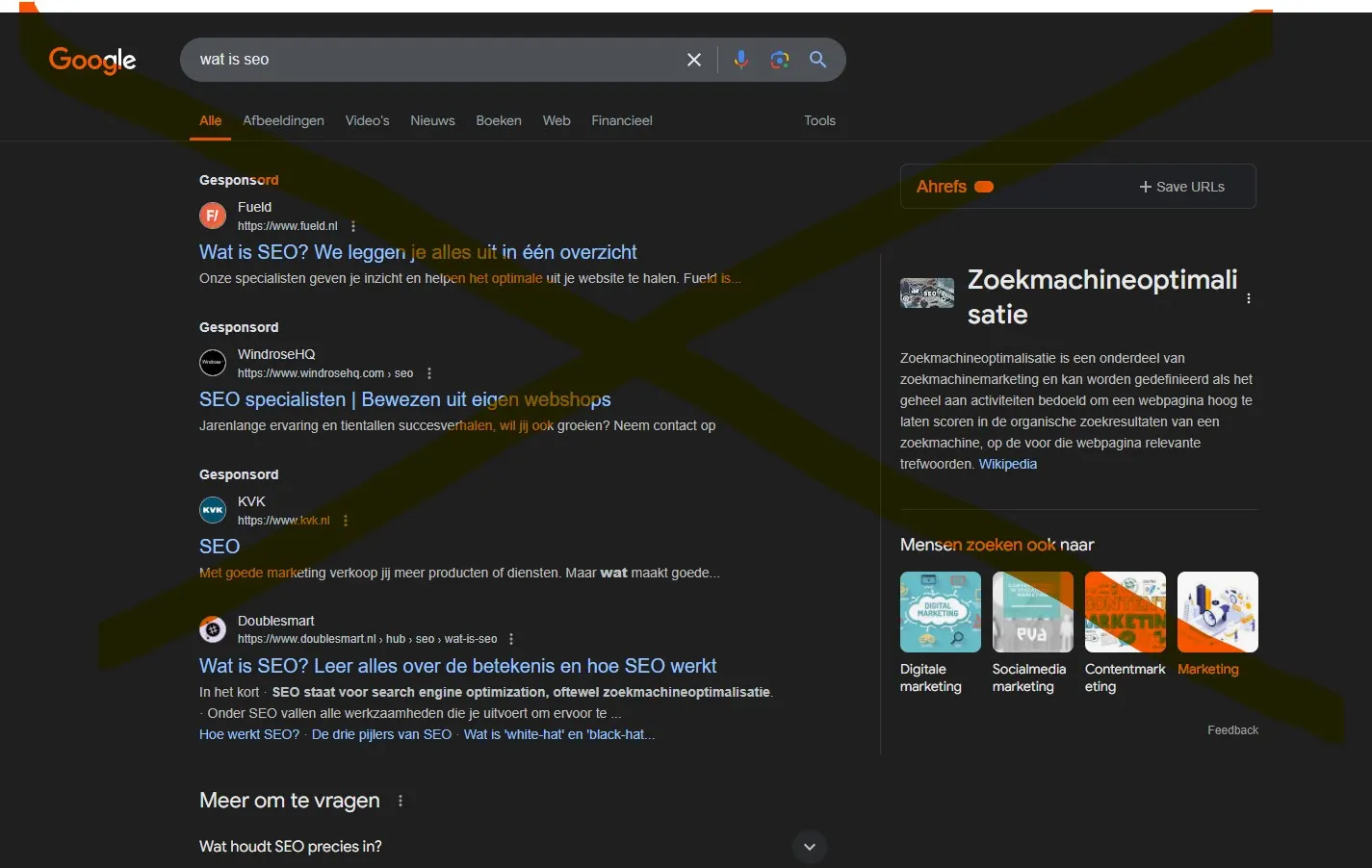
Now the searcher doesn't just get a quick answer, they can also easily ask follow-up questions to explore a topic more deeply and from different angles.
That's changing SEO too: it's no longer just about the top positions in the search results, but about content that AI sees as valuable and keeps using time and again. That way your information becomes an active part of the answer, and that's a whole new way of being visible.
But what does this mean for organic traffic?
What this means for organic search traffic! (Our expectation)
With AI models increasingly acting as a 'search assistant', we think people may click through to websites less often because they're already getting quick answers.
However, for the people who do click through, we expect their intent to be stronger and that they're further along in the decision process.
In other words: although total traffic may fall, we believe the visitors who do click through from AI-driven searches will be of higher quality.
They're already informed, have a specific need, and want more detailed information or to view a product. That produces traffic that's more likely to convert, because these visitors are already closer to a purchase decision.
Of course it remains to be seen exactly how this trend develops, but we believe SEO still holds strong added value here, it's just that the focus is shifting towards more qualitative, more targeted traffic.
So should you still work on your SEO?
With AI increasingly answering all your questions, you might think: "Is SEO still worth it?" Understandable!
But SEO remains important, even though the focus is shifting a little. People click through less, but the ones who do are often already seriously interested, ready to dive deeper or even make a purchase.
AI search assistants still use search engines to find up to date and relevant content on the web. So by doing SEO, you're indirectly optimising for AI too.
In short, SEO remains the foundation on which search engines and AI find you and build trust. Invest in that visibility with quality, relevant content, and you'll stay visible for good.
Curious how to make your SEO future-proof? Book a free call with us, we'd love to help you navigate this AI era!
Or wondering how AI can actually help you deliver better SEO results? Read this blog on AI and SEO.