Writing SEO copy? Discover 7 SEO copywriting tips for more sales!
 Joram BoonSEO and content specialist
27 March 2024 · updated 12 March 2024
24 MILLION! That's the number of online stores worldwide, according to WP Forms. And every single one of them is trying to grab a slice of the $5.8 TRILLION, yes, a T for Trillion, spent through e-commerce in 2023!
How? Marketing, obviously! But one of these marketing channels stands out from the rest, and that's SEO , particularly SEO copywriting!
Wouldn't it be great if you could write one piece of SEO copy that keeps pulling in ‘free’ SEO visitors to your online store from the search results for years to come! But how do you write effective SEO copy for online stores, copy that actually makes money?
We wondered the same thing, and we looked into it! Below, we'll cover the basics, things like keywords and search intent, but we'll also dive a bit deeper into product descriptions and SEO copywriting techniques such as the AIDA framework!
No time to lose, let's start with a few basic questions and then dive into the SEO copywriting tips!
What is SEO copy?
SEO copy means creating written content that's specifically designed to improve a website's visibility in search engine results.
But what makes SEO copy good? And what exactly counts as SEO copy? It's typically characterised by the following:
- Written for users, matched to search intent and geared towards action.
- Contains keywords, which make it clear to search engines what the text is about.
- Readable and user-friendly (UX), with clear formatting using headings and subheadings, made easy to read with lists, white space and short sentences.
- Current, containing up-to-date information that's useful to the reader, no fluff.
- Unique, so no copy-pasting blogs or product descriptions from Amazon, ha! Original SEO content builds credibility and strengthens your authority.
How long should SEO copy be?
There's no such thing as the PERFECT length! That said, search engines do favour more comprehensive content, because it offers users more information and more ‘value’. Plus, the longer the text, the more room you have to work in relevant (long-tail) keywords! 😉
For search engines, it comes down to ‘which content gives our users the best answer’. If you have the best answer and can make that clear in 100 words, that's perfectly fine!
But people often search for problem X, and while they're consuming that content, new questions or problems come up that they want answered too. So if you cover all of that in one piece of SEO copy, both people and search engines will value it hugely!
In short: provide answers and solutions to as many ‘relevant’ questions and problems people have as possible.
How do you write good SEO copy? (Step-by-step plan)
- Understand your audience:
- Know WHO you're writing for, what is your target audience? Understand their search intent and needs. Use social media, forums and other places where your audience hangs out to find out what their questions, problems and everyday language look like.
- Do keyword research
- Understand search intent
- Search intent (blog) is the ‘intent’ behind a user's search query. The four core types of search intent are: Informational, Navigational (e.g. Facebook login), Commercial (comparing products) and Transactional (buying products).
- Using keywords:
- Work your chosen keywords naturally into the text, including the URL, title tag, title, subheadings, and the first paragraph. Don't be spammy, using a keyword every now and then is enough!
- Create a catchy title and meta description:
- Write a catchy title and a compelling meta description that both contain your main keyword once. The point of these two is to get people to click! Use power words or ask a question that sparks curiosity, like ‘Want to learn the secrets of writing SEO copy? Discover them here!’
- Clear outline and optimise for readability!
- Use DESCRIPTIVE subheadings (H2, H3, etc.) to keep the text organised. Read tip 7 for more on this!
- Use bullet points or lists wherever possible, for scannable text where people can quickly find the information they want
- Create unique and valuable content.
- Make sure your content is informative, relevant and unique. We always say Quality beats Quantity. If you focus more on the quality of your SEO content, you create solid, future-proof website copy that's less vulnerable to algorithm updates!
- Use internal and external links:
- Add internal links to relevant pages within your website. This helps visitors find relevant information and helps search engines understand your website better.
- Use external links to show authority and trustworthiness. Search engines appreciate it when you back up the claims you make in your text with sources and research. That way, you show that ‘look, I've done my homework!’
- Add images and videos:
- People love visual content, it makes words and numbers clearer and creates more engagement. Don't forget to give your images and videos a descriptive ALT text!
- Update your content
- Keep your content up to date and rewrite old articles with new information. This shows search engines and readers that you're actively working to provide the best and most accurate information. And that's exactly what search engines and people are looking for!
- Analyse and improve
- Use tools such as Google Analytics and Google Search Console (blog) to measure your results and make improvements based on data. Look at metrics such as CTR, bounce rate and time on page.
What SEO copy needs to deliver is clear now, the foundation is laid! But you're a motivated online store owner who isn't settling for average, for position 4-5, no, you're going for position #1! So the following tips are for you…

7 SEO copywriting tips you can't afford to miss!
How do you write SEO copy that actually ranks and makes money too? Now it's time to go a bit deeper than the general guidelines above. Here are a few SEO copywriting tips you can apply today!
Tip 1: Grab attention with a hook!
HEY, YOU THERE! Do I have your attention? That's exactly the point, and here's why…
In the first few seconds, your reader decides whether your text is worth reading. So how do you grab their attention and never let go? With a hook so strong that clicking away isn't an option anymore.
Here's how…
The Question Hook
This hook uses an intriguing question to spark the reader's curiosity. The goal is to ask a question that's directly relevant to the reader, so they keep reading to find the answer.
Example: “Have you ever wondered how some websites always show up at the top of the search results?”
The Statistic Hook
This hook presents a surprising or impressive statistic relevant to the topic of the text, and we actually used one for this very text. Using concrete data grabs attention and builds credibility.
Example: “Did you know that 75% of users never look past the first page of search results?”
The Story Hook
This type of hook pulls the reader in with a short, engaging story or anecdote directly related to the topic. Stories create emotional engagement and make the information more personal and relatable.
Example: “When Jan started his online store, he never expected this one simple SEO tweak to triple his sales.”

Tip 2: Apply the AIDA framework
AIDA might just be the best-known and most widely used marketing formula in the world! You come across it every day, whether you realise it or not! But what exactly is the AIDA marketing model? Here's a quick explanation…
- Attention: This is the stage where you grab your audience's attention and curiosity to get them to read the next sentence, often using an eye-catching headline or another text hook like the ones discussed above. The goal is simply to get the visitor to read the next line.
- Interest: Once you've grabbed their attention, you need to spark your audience's interest by telling them more about the topic or product, often by highlighting the problem (pain point) your product or service solves.
- Desire: In this stage you build desire in your audience by painting a picture of their dream outcome. Show them what the result looks like once they've read the text or used the product!
- Action: Finally, you encourage your audience to take a specific action, such as reading on or buying the product! Be super clear here, visitors shouldn't have any doubt or confusion about what to do next! More on this shortly…
Let's apply the AIDA framework!
Let's apply the AIDA model to a piece of SEO copy about the importance of sustainable living for the environment, using a statistic hook.
Attention:
“A recent study found that simply switching to reusable water bottles can save an average household nearly 150 plastic bottles a year. That's just one example of how small changes can have a real impact.”
Interest:
But how can you actually make an impact? That's exactly what we've looked into and laid out for you! In these 7 tips, you'll learn how to live more consciously!
Desire:
You want to sleep soundly at night, knowing your children will also be able to enjoy beautiful nature later on, knowing you've contributed to a better planet! Sounds like something you'd want, right…
Action:
“Read the full guide to conscious living below, it's the first step towards a more mindful life!”
Now, that might make me sound like a bit of a climate crusader, but it does show clearly how the AIDA framework works in practice!
You grab attention with a statistic hook, then spark interest by showing what they'll learn, then build desire by listing the benefits, and finally give clear instructions on what to do next. Which brings us to the next tip…

Tip 3: Have a super clear CTA!
A super clear Call-to-Action (CTA) is hugely important, it forms the bridge between a user's interest or desire and the action YOU, as an online store, want them to take. An unclear CTA can lead to:
- Confused users: They don't know what to do next.
- Lower conversion rates: Fewer visitors take the desired action.
- Missed sales opportunities: Potential revenue goes to the next online store instead.
- Loss of focus: Visitors' attention can wander.
- Less user engagement: You lose chances for interaction that keep you top of mind.
How to create a good CTA
- Be specific and clear: Make sure your CTA clearly states what the reader should do after reading your text, for example “Read more about our SEO services“. If you're genuinely interested in getting more out of your online store, click the link! 😉
- Use strong verbs: Drive action with strong verbs like “Discover”, “Start”, or “Improve” to encourage readers to take the next step. Or add a touch of urgency, think ‘Exclusive’, ‘Secret’, or ‘Stock running low’! Curious about more power words? Check out this list of 161 power words! (Take a look here)
- Give a clear benefit: Make it clear what's in it for the reader, such as “Boost your website traffic today”. Spell out what the reader will get out of reading on or clicking through!
- Make it visually stand out: In digital content, make sure your CTA button or link visually stands out within the SEO copy, so readers can find it easily. Again, there should be no confusion about it!
- Match the content: Make sure your CTA is relevant to the content of your SEO copy. If your text is about improving local SEO, for example, create a CTA that invites readers to learn more about local SEO strategies or services.
- Test and optimise: Experiment with different CTAs in your SEO copy to see which ones deliver the highest conversion rates, and adjust your strategy accordingly. A/B testing is obviously the best way to do this, but it does require some technical knowledge!
Okay, you've got visitors to take ‘action’ and click through to a product! But the next challenge is waiting there: now you have to convince them to actually buy the product. You do that with a product description, which brings us to the next tip…
Tip 4: Optimise your product descriptions
A compelling product description is more than a simple list of product features. It's your sales pitch, your chance to tell a story that makes your product irresistible. Below you'll find steps and tips for creating the perfect product description, one that not only improves your online store's SEO, but also boosts sales.
- Know your audience: Write with your ideal customer in mind, use language that speaks to them and address possible objections with small stories.
- Focus on benefits: Turn product features into customer benefits. So instead of ‘satin duvet cover’ → ‘A velvety soft satin duvet cover that keeps you warm on icy cold days and breathes easily through hot, sweaty summer nights’
- Use natural keywords: Work keywords in in a way that feels natural. Three keywords in a product description is enough, as long as your main keyword is one of them!
- Back up your ‘claims’: Only make promises and claims you can actually deliver on or prove. Don't just say ‘this is the best pillow’ without evidence to back it up, from a consumer organisation, for example. Staying honest and genuine builds more trust in the long run and is better for your brand.
- Appeal to the imagination: Paint a picture for the reader of what it feels like to use your product. Tap into universal thoughts and experiences around your product. Perfume adverts are a good example of this, they paint a picture of the outcome you'll get from wearing their perfume.
- Add social proof: Show customer reviews or ratings on the product or sales page to build trust. A simple star rating or a handful of reviews from previous customers can overcome objections within seconds! This is hugely powerful!
- Use bullet points: Present features as benefits in a clear, organised way, so people can quickly scan the benefits. This makes it easier to make a decision, and therefore easier to move to purchase!
- End with a strong CTA: Encourage the reader to take action with a compelling call to action. And as discussed earlier, this should be clear, use power words and ideally create a touch of scarcity or urgency too!
Now you've got a killer SEO product description! By the way, don't forget to also apply the other SEO copywriting tips here, such as the hook and the AIDA framework! But for now, let's move on to long-tail keywords, the tactic for a few quick rankings…

Tip 5: Start by focusing on low-competition long-tail keywords
Long-tail keywords are a popular and effective way among online marketers to rank fairly quickly. They're longer (3+ words), more specific search terms that users search for when they're closer to a purchase decision. For example, instead of ‘shoe cabinet’, you'd focus on ‘shoe cabinet with sliding doors’
A quick way to do this is to use the Google search suggestion bar or related searches. Amazon's search bar is often a goldmine too! The easiest option, of course, is to use SEO tools such as Ahrefs, Semrush and KWFinder.
It's worth learning more about long-tail keywords and how they can help you rank faster! Luckily, we've covered this in detail too!
>> Check out the blog here! << , also a CTA ;)!

Tip 6: Optimise for featured snippets!
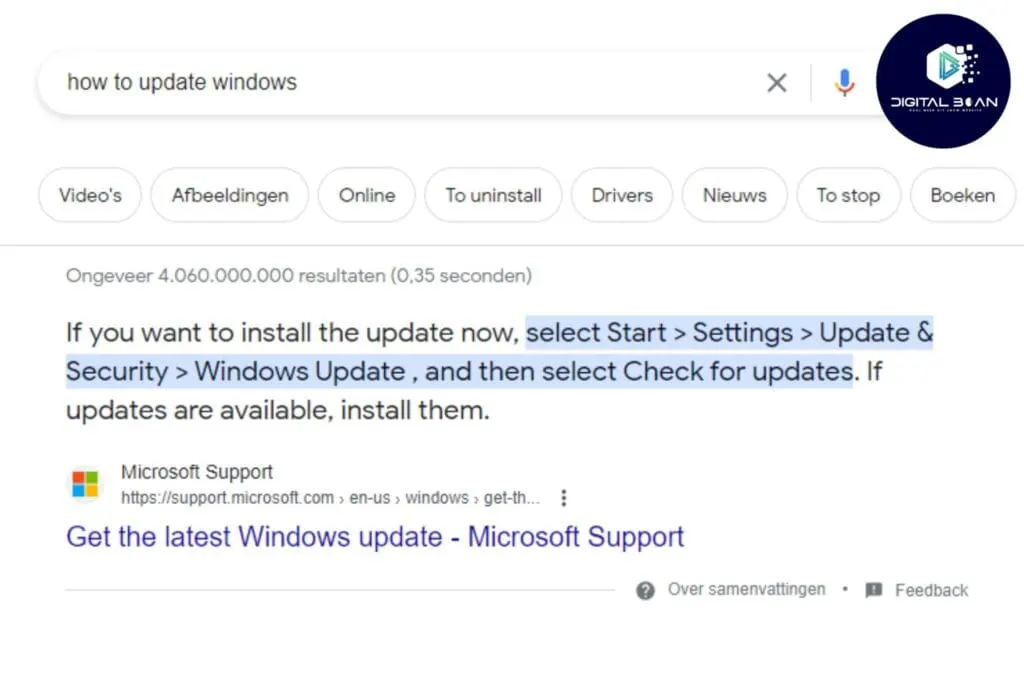
Featured snippets, also known as position zero in the search results, give a concise answer to the user's search query. They're shown at the top of the search results and can drive significantly more traffic to your website. There are several types of featured snippets, such as paragraphs, lists, tables and videos.
How to optimise for featured snippets?
- Identify frequently asked questions: Focus on questions relevant to your products/services. Use “Answer the Public” for inspiration.
- Use the right format: Base this on the snippet format for your keyword. Structure content as:
- Paragraphs: Maximum 58 words.
- Bullet points/numbered lists: 3-9 items.
- Tables: Maximum 6 rows.
- Clear answers: Provide direct, concise answers so they're easy for Google and your readers to recognise.
These bullet points are actually a good example of optimising for featured snippets, though this isn't the current format of Google's results. So we'll see if it works, time will tell. 😉
The new featured snippets of Google's Search Generative Experience (SGE)
Google’s Search Generative Experience (SGE) is an SEO trend that uses smart AI to better understand what people are searching for. This lets Google give answers that not only match the question precisely, but also offer more information and context.

For anyone creating SEO content for the web, this means two important things:
- Create content that gives a direct answer and offers in-depth knowledge.
- Search intent becomes even more important! Try to understand WHY someone is searching for something and adapt your content accordingly.
- Answer follow-up questions! Think about what the reader's next question will be after question X, and answer question Y too!
By already taking SGE into account now, for example by writing your texts naturally and keeping quality high, you prepare your website better for how search engines will work in the future.
Now you have a piece of SEO copy that's ready to conquer the search results! But the content is only part one! Promoting your content is the next step…
Tip 7: Use your primary keyword strategically in your content, URL, meta description, and title tag!
Make sure your keyword appears in these places for the best results:
- Title and subheadings: Put the keyword in the title and once in an H2 heading.
- The intro and outro: Use your primary keyword in the first 100 words, and the last 50 words, of your SEO article.
- In the URL: Add your keyword to your web address. This helps people and Google quickly see what your page is about. But keep it short, that's how you make an SEO-friendly URL!
- In the meta description: This is the bit of text under your link in the search results. Use your keyword here too, to get more clicks.
- In the title tag: This is the title of your page in the search results. Start your title with the keyword for extra attention.
This SEO technique isn't just SEO best practice, it also creates strong cohesion in your content. It reminds your readers and the search engines of the main topic of your text, from start to finish.

Make your SEO content known to your audience!
Now that you've created and optimised fantastic SEO content, it's time to promote it and make sure your audience actually sees it. Here are two simple ways to spread your content:
On social media:
- Share your articles: Post links to your blogs or pages on platforms such as Facebook, Instagram, and Twitter. Add eye-catching photos and a short explanation to make people curious.
- Hashtags are your friend: Use hashtags (#) that fit your topic, so more people can find your posts.
- Talk to your followers: If people comment, comment back! That keeps them interested.

Via email:
- Start an email list: Ask visitors to your website for their email address, so you can send them updates.
- Make it personal: Say “Hi [name],” at the start of your emails and choose topics that genuinely interest your readers.
- Always send something useful: Every email should offer something fun (entertainment) or useful (value). That way, people look forward to your next email.
- See what works: With tools such as Mailchimp or Reloadify, you can see how many people open and read your emails. Use what you learn to keep improving.
These are simple ways to share your great content with the world and attract more visitors to your site! This has been explained in a simple way and might feel a bit surface-level, but it doesn't need to be made more complicated than it already is!

Time to get started with SEO copywriting!
Now you're all set to write SEO copy that ranks. Time to get started! But first, let's quickly recap everything…
SEO copy is text that's optimised for search engines, without leaving the search engine's user behind!
Good SEO copy consists of unique, up-to-date content, made for people to read easily, and answers a search query with attention to search intent!
Take another look at the step-by-step plan at the start of this blog for the most important general points. A good foundation is half the job!
Then use the 7 SEO copywriting tips to make your texts stand out even more! Here they are again, in short…
- Use a hook: Grab your readers' attention with a question, a surprising statistic or a short story. Make sure they want to keep reading.
- Follow the AIDA framework: Grab attention, spark interest, create desire and drive action. Start with something eye-catching, explain why it matters, show how good it can be, and end with a clear next step.
- Clear CTA: Include a clear call to action. Tell readers exactly what you expect from them, such as “Click here to learn more!”
- Optimise product descriptions: Write compelling descriptions that highlight not just the features but also the benefits of the product. Use keywords naturally and add customer reviews for credibility.
- Focus on long-tail keywords: Start with more specific, longer keywords that have less competition, so you can rank faster. Use keyword tools for inspiration.
- Optimise for featured snippets: Structure your content so it gives answers in a format Google likes to use for snippets, such as lists or short paragraphs.
- Use keywords strategically: Place your primary keyword in the title, subheadings, the URL, the meta description, and at the start and end of your content, for the best SEO results.
Simply put: grab attention quickly, keep your message relevant, and make taking action easy. That's how you write SEO copy that ranks and sells.
Get more out of your online store with Digital Bean!
Want to see these SEO strategies in action on your online store, but don't fancy putting in the time and effort yourself? We're happy to help, with SEO web copywriting!
What you can expect from us:
- Honesty, no hidden agenda with our wallet as top priority! Instead, a fair partnership that creates a genuine win-win!
- Transparency about results, we clearly show what the SEO channel delivers!
- Short lines of communication, running an online store is hectic with lots of moving parts, so fast communication is key! You'll get a reply within 24 hours on working days!