SEO for online stores, how do you do it?
 Joram BoonSEO and content specialist
28 February 2024 · updated 1 March 2024
Have you just started your online store, or have you been struggling for a while without seeing the results you want? It can be frustrating to see your online store not getting the attention it deserves, despite all your efforts!
SEO for online stores can feel really complex, or even overwhelming. And the fact that almost every search result about e-commerce SEO is full of unexplained jargon doesn't make it any easier! But don't worry, in this blog we'll cover all the 'online store SEO' jargon in simple language.
You'll learn how to lay a solid SEO foundation with effective keyword research and by creating topic clusters. We'll discuss how to set up a hierarchical website and menu structure that appeals to both search engines and visitors. But we'll also cover loading speed, SEO-friendly URLs, meta titles (page titles) and image optimisation.
So grab a coffee or tea, and let's give your online store an SEO boost!
In short…
- Make sure you do thorough keyword research; this is the foundation of your SEO strategy.
- Create a logical, hierarchical structure on your website to help both users and search engines.
- Optimise your online store's loading speed, essential for the user experience and SEO rankings.
- Make sure you have a clean, user-friendly website design; this keeps visitors on your page for longer.
- Avoid thin and duplicate content; unique, valuable content is king.
- Pay attention to on-page SEO: optimise your URLs, titles, meta descriptions and images.
- Don't forget to regularly write quality blogs and build backlinks for a strong online presence.
Start with keyword research using topic clusters
The foundation of every SEO strategy is keyword research! There's no way around it if you want to know HOW your potential customers search, and where YOU need to be visible to help those customers. Because let's be honest, you have the best product on the market, and everyone needs it!
A simple but effective way to find relevant keywords is through Google's autocomplete feature and related searches. This technique helps you understand what your audience is searching for and which keywords they use.
- Google autocomplete: Type primary (main) keywords related to your online store into Google's search bar, such as "seo online store". Note the auto-suggested completions. These are often search terms that users type in a lot. When we type in our primary keyword, you'll see 'improve online store seo' come up!

-
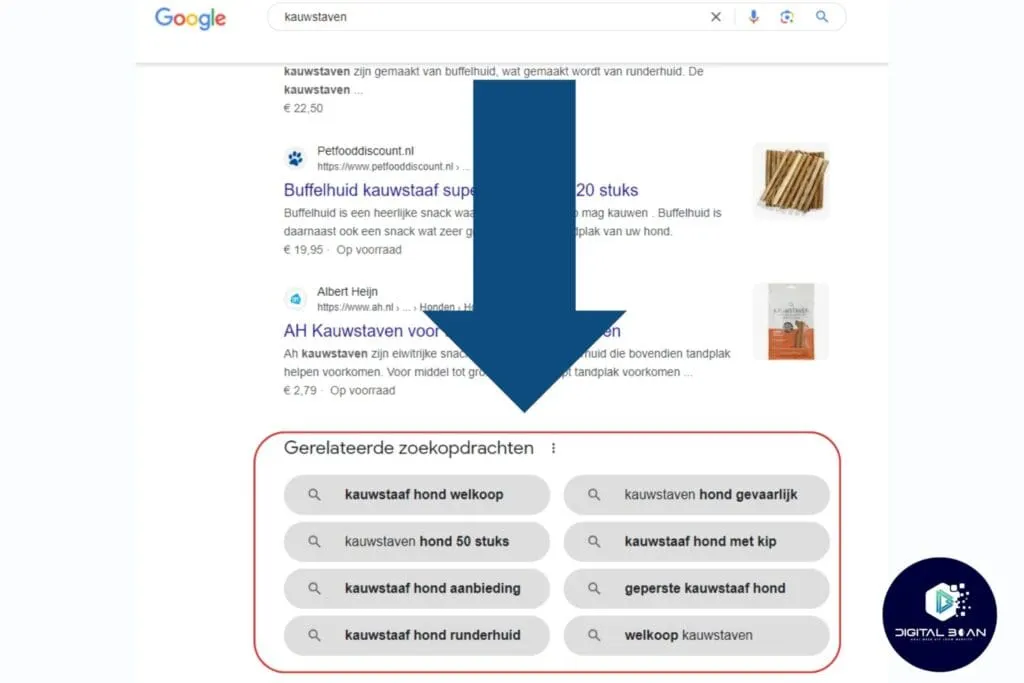
Related searches: After running an actual search, scroll to the bottom of the Google page to find the 'Related searches' section. These searches are relevant to your original (primary) search and can offer valuable insight into specific questions or topics relevant to your audience.
We personally use extensive SEO tools that give us in-depth insight into keywords and related keywords. We mainly use Ahrefs, but SEMrush and KWFinder are also definitely good options! These do cost money, but you'll quickly earn that back with an effective SEO strategy!
What are topic clusters?
Topic clusters are a collection of related articles grouped around a central topic, which helps search engines better understand the content and how it all connects, improving the website's visibility.
Each cluster consists of a main page, the 'pillar page', which gives an overview of a broad topic, and links to multiple content pages that go deeper into subtopics, all linked back to the main page
Use ChatGPT to create topic clusters
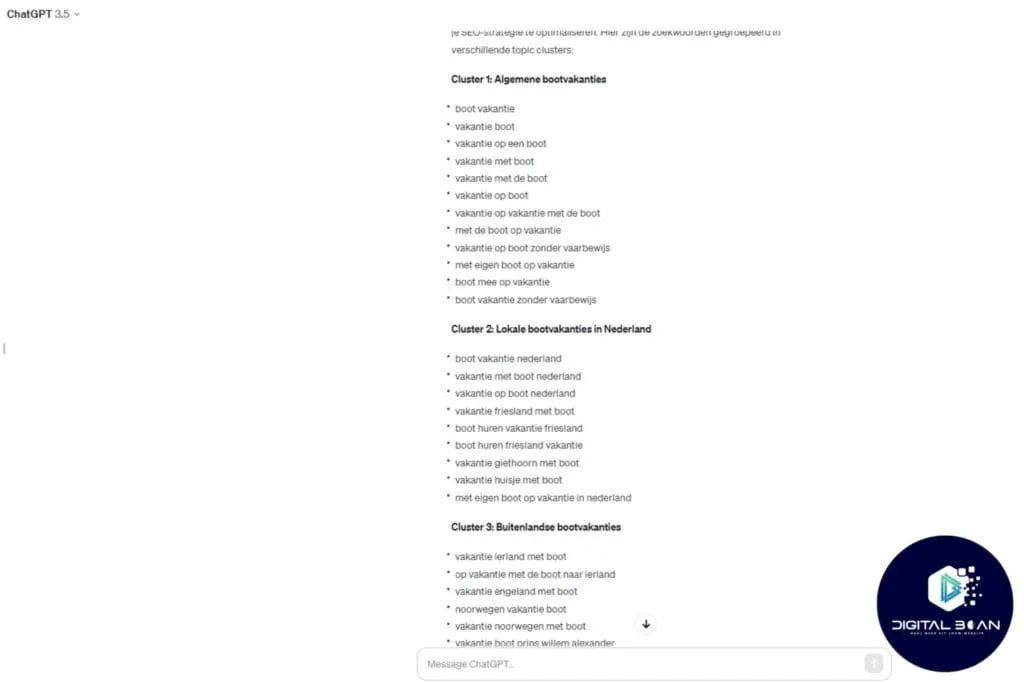
Once you've identified your most important keywords, you can use ChatGPT to create topic clusters. This used to be a time-intensive SEO task, but once again, ChatGPT saves the day! Here's how you can use ChatGPT (3.5)…
"ChatGPT, I'm working on SEO for my online store and have identified the following keywords: [list of all keywords]. Can you divide these keywords into topic clusters?"
If all goes well, you'll get a response that looks something like… [see image]
Build a hierarchical website and menu structure
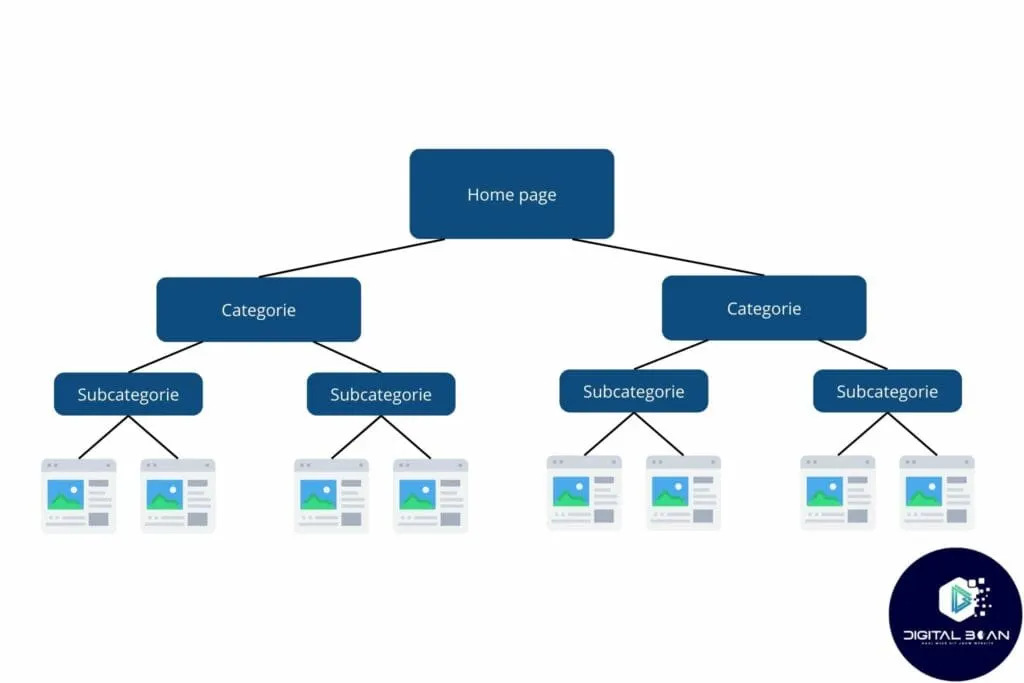
A clear hierarchical structure is crucial for online stores. This logical setup, with a distinction between main and subcategories, helps both search engines with indexing and users with navigation. You'll find a good visual example below!
Add internal links!
Now you've got a solid structure, but that's not the end of it! A good 'internal link structure' matters too! This builds a virtual bridge between categories, subcategories and product pages, so search engines and visitors can easily navigate through the website to relevant content and products.
Strategically placing internal links from your main pages to sub-pages also distributes online authority (link juice) and improves SEO. This makes your most important content visible.
Create a clear menu structure
A user-friendly menu structure is hugely important for the success of your online store. The menu should reflect the hierarchy of the website and clearly show visitors where to find certain information or product categories.
Make sure your menu isn't too cluttered; too many options can actually put visitors off. Keep it simple, structured and intuitive.
- Make sure your main categories are prominently displayed in the menu.
- Use dropdown menus for subcategories to keep it organised.
- Make sure your menu works well on both desktop and mobile devices.
- Don't go deeper than 3 levels, that keeps it clear and accessible!

Make sure you have a fast loading time!
A fast loading time is crucial for keeping visitors on your online store. Why? Because speed has a direct impact on the user experience and search engine rankings.
This statistic from Google shows that the chance of a bounce (leaving the site immediately) increases by 32% when a page's load time goes from 1 to 3 seconds. That paints a pretty clear picture of how important loading speed is for both customer satisfaction and SEO, right?

5 quick tips to minimise loading time!
- Optimise images: Use tools to compress images without losing quality. Large images can significantly slow down loading time.
- Minimise elements: Reduce the number of elements on your page. This means fewer scripts, images and CSS files, just keep it simple!
- Use browser caching: Store certain elements of your website in the user's browser, so they don't need to be reloaded on every visit.
- Remove unnecessary plugins: Too many plugins can slow down your website. Critically assess which plugins are truly necessary.
- Use lazy loading: Only load images and content that appear in the user's viewport.
Want more tips? Sign up for our newsletter!
Use a CDN for international online stores
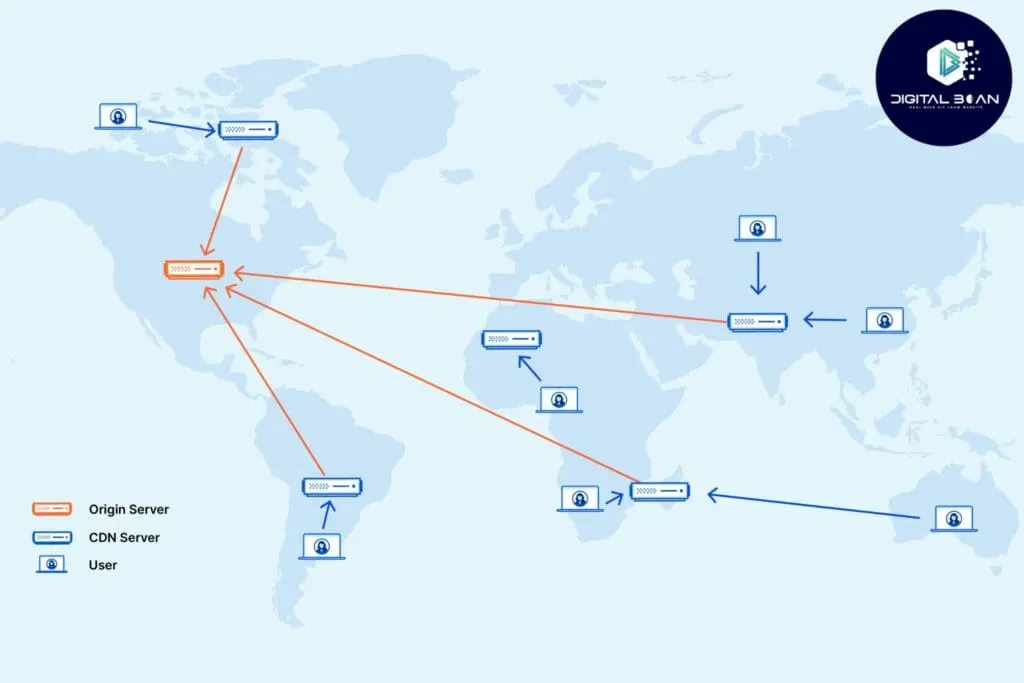
For international online stores, a Content Delivery Network (CDN) is essential. A CDN stores copies of your website in various data centres worldwide.
When a user visits your website, the content is delivered from the nearest data centre. This significantly reduces loading time and bounce rate, and boosts your chances of a sale quite a bit!
Have a clean, user-friendly website (UX)
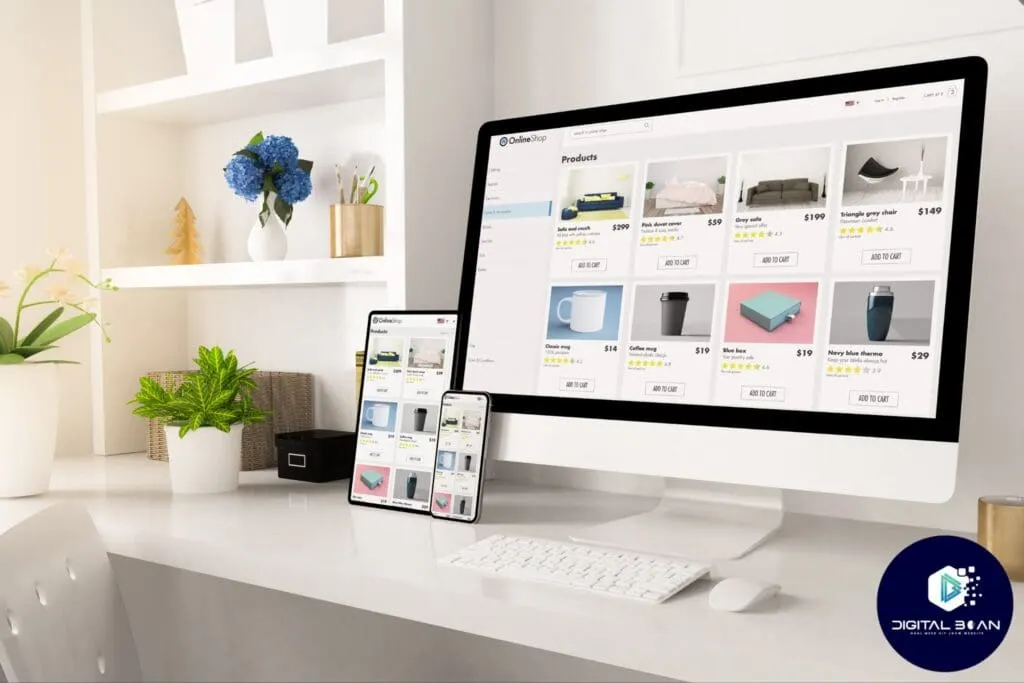
Less is more: In the world of e-commerce SEO, a clean, simple design is king. Your online store shouldn't just look good and modern, it also needs to be super clear and easy to navigate. From the homepage all the way to checkout, every step should feel effortless for the user.
Focus on user convenience: Think clear categories, minimal use of distracting elements, and a search function that helps customers quickly find what they're looking for. Every extra click a customer has to make can make the difference between a sale and a lost visitor.
Consistent style: Keep a consistent look and feel. Use a fixed set of colours, fonts and style elements that match your brand. This creates a professional look and builds customer trust.
Optimal checkout experience: The checkout page should be simple and clear. Avoid unnecessary fields for customers to fill in. Make the payment process as smooth and clear as possible, because this is where the actual conversion happens.
A good user experience (UX) leads to happy customers and, ultimately, more sales.
Avoid thin and duplicate content!
Thin content refers to pages on your online store that offer little or no added value. Think product pages with minimal descriptions, or blog posts containing only surface-level information.
Picture a product page with just a photo and a price, but no proper description or details. This type of content doesn't contribute to a positive user experience and is often ignored by search engines such as Google.
Duplicate content is when identical or very similar content appears in multiple places within your online store. This could be product descriptions copied from other websites, or reusing the same content across different pages of your own online store.
How do you avoid thin and duplicate content?
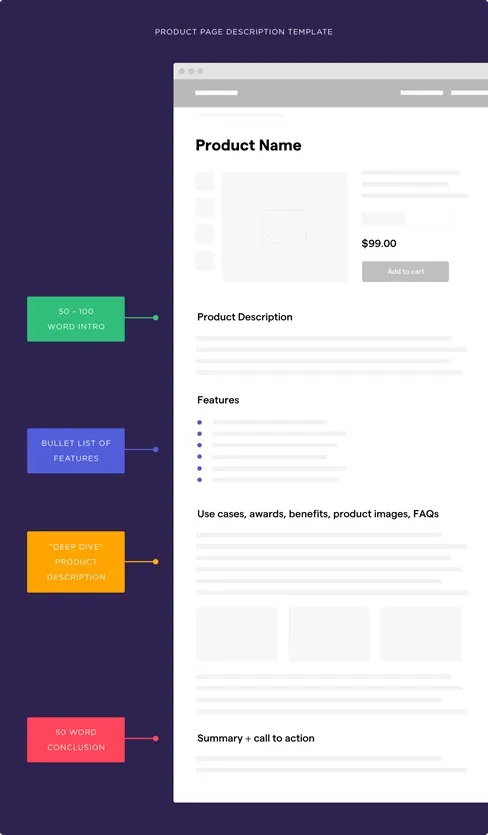
- Write unique text for every product: Treat every product as unique. Write a proper description that explains what the product does, why it's special, and what the benefits are. Here's a template you can use!
- Tell search engines which page matters most: If you genuinely need the same information on more than one page, you can use something called a 'canonical tag'. This is a simple signal to search engines that says: "This is the original page, pay attention to this one."
- Make every page valuable: Make sure every page offers something useful to the visitor. This could be more details, customer reviews, or how the product can be used.
- Avoid auto-generated text: Don't use tools that automatically generate text for you. This text is often low quality and can be seen as 'thin'.
- Check your online store regularly: Every now and then, go through your online store and look for pages that might have thin or duplicate content. Update or merge these where needed.
- Use redirects: If you really can't avoid duplicate pages, you can use a technique called a '301 redirect'. This sends visitors (and search engines) from one page to another, more relevant page.
By following these tips, you make your online store not just more search-engine-friendly, but also more valuable for your customers!
On-page SEO for e-commerce
On-page SEO is optimising the front-end of your web pages, the parts people and search engines actually see and read! This is a long-term, ongoing SEO process that never really ends. Here are the most important on-page SEO optimisations for online stores…
URL structure
A well-structured URL is crucial for SEO success, especially for e-commerce websites. Make sure your URLs are short, clear and descriptive. Add the primary keyword where possible, but avoid using unnecessary parameters (filters) or numbers.
Example URL: www.yourshop.com/natural-skincare/organic-face-cream/
This URL is effective for several reasons:
- Simple and descriptive: It's simple and immediately clear what the user can expect on this page.
- Keyword use: The primary keyword 'natural skincare' is included, which helps with search engine optimisation.
- Category and subcategory name: The URL includes both the category ('natural skincare') and the subcategory ('organic face cream'), which helps with the site's organisation and SEO.
- Readable for both users and search engines: Both users and search engines can easily understand what the page is about, which contributes to a better user experience and search engine ranking.

Title tag and meta description
The title tag and meta description are essential for both search engines and users. They should not only contain relevant keywords, such as 'seo for online store', but also be appealing and compelling enough to click on. A good title tag for a product page could be: "SEO for Online Stores: Optimise Your Online Shop". A matching meta description gives more context and prompts action, for example: "Discover how our SEO services can transform your online store's visibility and boost your sales."

H1 tag
The H1 tag is the main heading on your page and should include your most important keyword. For an e-commerce site, this could be something like the example below, "Outsourcing SEO". This immediately shows what the page is about, so people and search engines know what it's about within a few seconds.
Wondering whether you should outsource your SEO? Check out our blog to make a well-informed choice! Click here!
Optimise image files and alt text
Images might just be the most important part of e-commerce websites when it comes to getting people to buy. That's why image SEO optimisation is far from an unnecessary luxury.
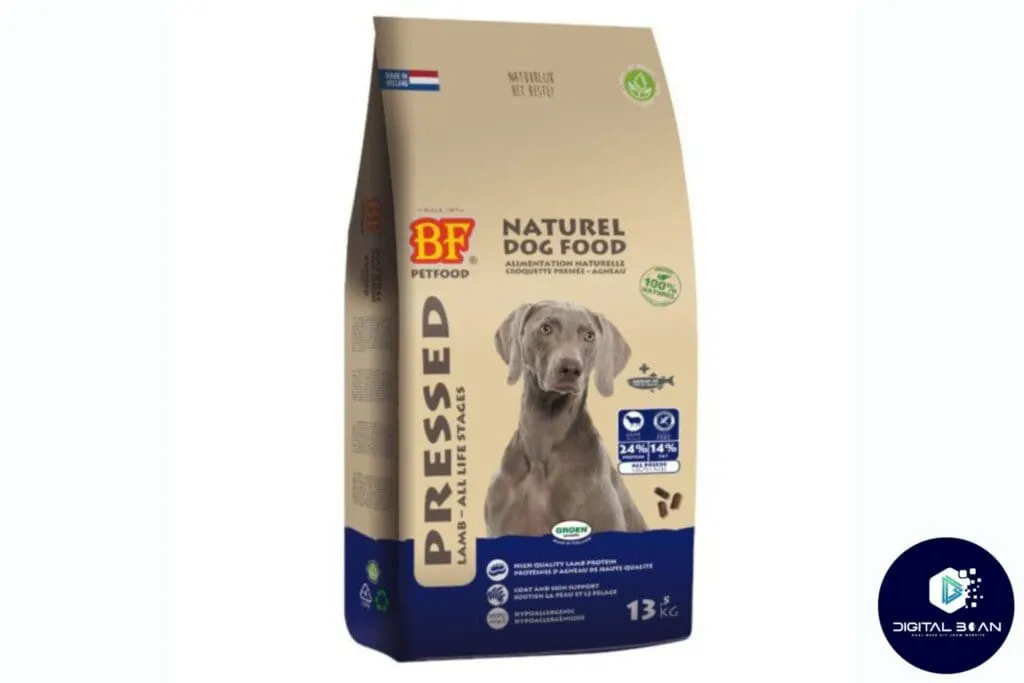
Use descriptive file names and alt text with relevant keywords, such as 'bf-petfood-dog-food-pressed-lamb-packaging' for the example below. This helps search engines understand what's in the image and improves your website's visibility.
Structured data
Structured data is like adding a detailed business card to your website. It helps search engines such as Google understand exactly what's on your site. For example, if you sell a product, structured data can include information such as price, availability, and (star) ratings.
This isn't directly visible to visitors, but search engines use this information to show rich results (rich snippets), which can lead to more clicks and better visibility for your online store. Think of it as giving search engines extra hints to present your content better.

Build backlinks
Backlinks are links from other websites to your online store, essential for your online authority, also known as link building. They work like digital word of mouth, with search engines seeing these links as a sign of trust and relevance, which matters for a higher ranking in the search results.
If your favourite blogger or influencer recommends a product or service on their website, you'll probably go check out what they have to offer! That creates yet another stream of traffic.
Three quick ways to get backlinks
- Content creation and promotion: Create engaging, valuable content that people WANT to share. This can range from in-depth guides and how-to articles to engaging infographics or videos. Once you have this content, actively promote it via social media, email newsletters and contacts in your industry. Quality content generates natural backlinks when people find it valuable and want to share it.
- Guest blogging: This is a classic, but still effective, method. Write blogs or articles for other websites in your industry. Make sure these sites are reputable and relevant to your niche. In exchange for your valuable content, you get a backlink to your online store. It's a win-win: the site gets free content and you get a quality backlink. (though in practice this isn't always so easy, ha ;).)
- Networking and partnerships: Build relationships with other businesses and influencers in your industry. This can lead to natural backlink opportunities, such as joint promotions, interviews, or even simple mentions in blogs or on social media.
Write blogs for lasting success and a trusted customer relationship
Blogging is an essential strategy for any e-commerce SEO strategy, attracting potential customers in the 'awareness' and 'consideration' stages of the customer journey.
What's unique about blogs is their ability to drive traffic to your online store for a long time, an investment that translates into years of visibility. This traffic is valuable because it consists of readers who get to know and trust your brand. That way, you turn visitors into loyal customers, by already giving them a lot of value upfront!
In short, by blogging regularly, you're not just building your SEO, but also customer relationships and trust, which is fantastic for the ROI (return on investment)!
E-commerce SEO in a nutshell!
SEO for your online store doesn't have to be complicated. Start with a strong foundation: keyword research and a clear, hierarchical website structure. Speed matters, so make sure you have a fast loading time, and use a Content Delivery Network (CDN) if you run an international online store.
The key to success? A user-friendly, simple website with unique content. Optimise your on-page elements such as URLs, title tags, H1 tags and images. And don't forget the impact of schema markup for better recognition by search engines, go for those rich results!
Backlinks and regularly updated blogs are essential for keeping your site fresh and relevant. All these elements together form the core of an effective SEO strategy for your online store.
Ready for the next step in online store SEO?
Have you got the basics of SEO for your online store down, but are you ready to really make your online visibility explode?
At Digital Bean, we're committed to driving your e-commerce success. Our team is your e-commerce SEO specialist and is ready to develop a strategy perfectly tailored to your unique needs.
Get in touch with us today for a no-obligation chat. Let's discover together how we can get your online store to the top of the search results!