What Is Black Hat SEO? ‘The Dark Side’ of SEO Explained!
 Joram BoonSEO and content specialist
8 May 2024 · updated 26 September 2026
Fast SEO results without much effort? From no rankings at all to more than 100 top-10 positions in just a few weeks. Doesn't that sound like an attractive offer? But how…
Black hat SEO
The methods that promise lightning-fast jumps in search engine rankings by exploiting weaknesses in search algorithms.
Super tempting, of course! But those quick wins can quickly turn into long-lasting consequences. From penalties to brand reputation damage, you name it. We never recommend it, but it matters to know how it works so you don't accidentally fall into the trap.
Here's what you'll learn in this blog:
- What Black Hat SEO is
- Black Hat SEO techniques
- Its possible benefits
- The risks and how to avoid them
- The difference with White Hat SEO
What Is Black Hat SEO?
Black hat SEO refers to practices used to improve a website's position in search engine results by breaking the rules and guidelines of search engines like Google.
This type of SEO often focuses on "quick result" strategies aimed at manipulating the search engine's algorithm, but that offer no real added value to the website's users. Whereas that's actually what SEO is all about!

Black Hat SEO Techniques
Keyword Stuffing
This is when a web page is stuffed with lots of (irrelevant) keywords or numbers in an attempt to rank higher in search engines.
It often makes the text hard to read and feels unnatural. It's a bit like someone repeating the same words over and over to get attention.
If you find out you might have done this unintentionally, some content pruning is in order. That's a process where you remove old or poor-quality content from your website. Read more about content pruning here!

Cloaking
With cloaking, you show two different versions of your website: one for the regular visitor and one for the search engine.
It's like having a secret door; regular visitors see the normal room, but the search engine sees a special room optimised to be found more easily.
Search engines don't appreciate this, because it's not fair to other websites and users.

Hidden Content
Hidden content is text on a website that search engines can see, but that isn't visible to visitors. It's often hidden by giving the text the same colour as the background, or by placing it outside the visible part of the page.
People use hidden content to mislead search engines and rank their website higher than the content the user actually sees would justify. It's mainly used on landing pages or commercial pages for products and services.

Link Manipulation
Link manipulation is artificially increasing the number of links to a website to boost its authority or EEAT factor.
This is often recognisable by a sudden increase in irrelevant or low-quality links, links from spam websites or link farms, and repeated use of the same keyword-rich anchor text.
You can often just buy these yourself for a few euros on Fiverr, and they're usually extremely poor quality.
Reading tip! You'll be well on your way once you've finished this blog. Our blog about EEAT is really worth reading too, for sustainable, long-term online growth. >> Read it here! <<

Duplicate Content
Duplicate content happens when exactly the same or very similar content appears in multiple places within or across websites.
It's often used to quickly spread a lot of content in the hope of better rankings. However, search engines can spot this and will rank you poorly, or not at all.
Search engines want new, fresh, up-to-date content that's relevant NOW, not copied manufacturer product descriptions or copy-pasted blogs that were relevant back in 2014.

Doorway Pages
Doorway pages are specially created pages, often stuffed with specific keywords, designed to rank highly in search engines for particular search queries.
These pages often funnel users through to another, related page that frequently has completely different content.
They're used to attract more traffic to a site, but can be misleading and damage the user experience, or even involve a scam.

Comment Spam
Comment spam refers to posting unwanted, often irrelevant links and messages in the comment sections of other websites.
This tactic is used to create backlinks to their own website without offering anything in return.
It's obviously pretty antisocial, and it can seriously undermine the credibility of both their own website and the website they're posting on.
Which brings us nicely to the next black hat SEO tactic: Negative SEO.
Negative SEO
Negative SEO refers to the practice of using black hat SEO techniques to damage a competing website's search engine rankings.
This can take various forms, such as mass-creating spammy or low-quality backlinks to a competitor's website, copying their content and spreading it across the internet to cause duplicate content issues, or even hacking the site to insert malicious redirects or malware.
But it can also be as simple as leaving bad Google reviews using several fake accounts.
People often do this to make their own site rank relatively better by dragging down the performance of competing sites, even though search engines strongly disapprove of it and penalise it.
In our opinion, this is the ugliest thing you can do in online marketing.

Fraudulent Redirects
Redirects are used to send visitors from one URL (web address) to another, often for legitimate reasons. Or sometimes even to open multiple web addresses when you click a single link.
In black hat SEO, they're abused to manipulate search engines and unexpectedly send visitors to other, sometimes harmful, sites. These can show sexual content or well thought-out scams.
These redirects can be built into certain pages as a link within the text or in the menu bar.

Mass-Publishing Unchecked Automated Content
Publishing automatically generated content means texts and pages are created and published without any human involvement.
This technique is often used to generate a lot of content quickly, but it frequently lacks quality and relevance.
While Google has nothing against 'good' AI-generated content, it does have a problem with spammy content and shallow content that offers users little to no value.
You can often spot it by grammatical errors, odd language use, and constant repetition of essentially the same information.

Misuse of Structured Data and Rich Snippets
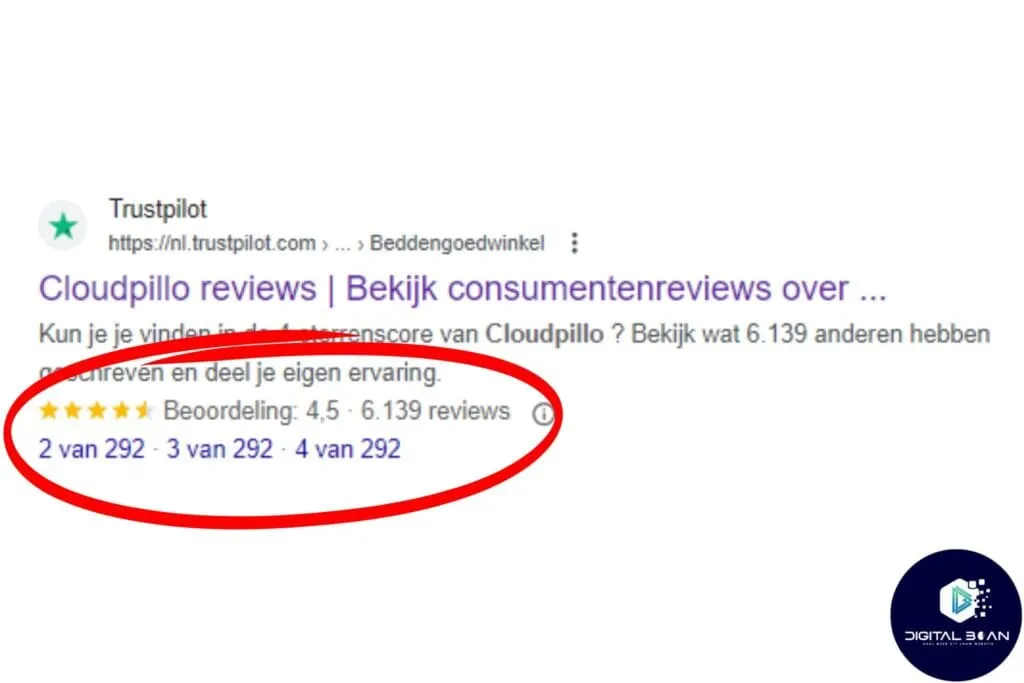
Structured data helps search engines better understand a page's content, and can lead to rich snippets appearing in the search results, such as ratings and prices.
Misuse of this technology is common on e-commerce sites and in competitive sectors, where businesses provide inaccurate or misleading information to make their product look better and try to boost visibility, generating more clicks and sales.
This kind of practice can look beneficial in the short term, but it ultimately risks penalties from search engines.
It's bad for the credibility of your brand or online store, and in the long run you'll lose your rankings
Possible Benefits
- Fast results, black hat SEO can deliver extremely fast results, within a few days or weeks you can pick up a lot of rankings, which is obviously very interesting if you're launching a new product or service.
- Saves time and money in the short term, in the short term you can save both time and money by skipping long-term SEO best practices. Think of buying links in bulk at a very low rate.
- Beating the competition, by ranking quickly or making a product look just a bit better through misleading structured data, you can gain an edge over your competitors.
- Finding the limits of search engines, by testing what works and what doesn't, you can see where the line is and which techniques you can get away with, also known as grey hat SEO.
- Fast recovery after algorithm updates, by finding new weaknesses and using them to quickly regain rankings, you can bounce back fast from an update that's hit you hard. This usually takes a fair bit of technical knowledge though, and isn't for everyone.
Consequences of Black Hat SEO and Why You Should Avoid It!
Black hat SEO might sound like a quick way to get your website ranking high in the search engines, but the consequences are often not worth it. Let's take a look at why, in our opinion, you're better off avoiding these practices:
Search Engine Penalties
The most obvious answer to 'Why shouldn't I do black hat SEO?' is the penalties search engines hand out for these practices.
These penalties range from losing your rankings to being removed from the search index entirely, meaning people won't be able to find you at all in that search engine's results.
You can probably guess the result. Fewer rankings, less traffic, and therefore fewer sales or leads. On this reason alone, it's something we'd strongly advise against.

Short-Term Gain vs Long-Term Loss
In the short term it can definitely work! But in the long run, it'll eventually catch up with you.
Google and other search engines are constantly rolling out new updates and improvements to close loopholes and clamp down on unfair practices.
And if you can figure out a technique, so can the clever minds at Google and other search engines. So in the long run, you'll most likely end up facing an algorithm update or a penalty.
Your Business's Reputation
Using black hat SEO can be enormously misleading. By using these techniques, you risk not just technical penalties, but also damage to your brand's reputation.
These days, customers and partners value transparency and honesty, qualities that are hard to find in black hat SEO. Especially at a time when so much is already hidden from the consumer.
So if you run a business and want to keep running it for the long term, this really isn't the way to go. But if you want quick rankings or want to test the limits, go ahead, nobody's stopping you, just think carefully about what it does to the reputation of your website and business.

White Hat SEO vs Black Hat SEO
White hat SEO uses techniques that are fully in line with search engine rules. It's about offering value and solutions to users by writing good SEO content and building links naturally. The result is sustainable growth and a strong long-term reputation.
The main techniques used in white hat SEO:
- Create good content: Write useful, interesting articles that people genuinely want to read.
- Improve your website: Make sure your site loads quickly, is easy to use on smartphones, and is enjoyable to visit.
- Earn links honestly: Get other trusted, well-known sites to link to you because they genuinely rate your content.
Black hat manipulates the algorithm and offers little added value to the user, often even misleading them. It usually delivers quick results, often within a few days or weeks, but unfortunately these are often short-lived. On top of that, it carries the risks we discussed earlier, which can get seriously in the way of your future goals.
The main techniques used in black hat SEO:- Using too many keywords: Stuffing the same words all over your page hoping to rank higher on Google. This used to work incredibly well, but it got wiped out during an algorithm update.
- Cloaking: Showing search engines something different from what your visitors see.
- Hidden text: Hiding text your visitors can't see, but that search engines can read, in order to rank higher.

Allow us to introduce… Grey hat SEO.
Grey hat SEO strikes a balance between white and black hat methods. It's less risky than black hat SEO, but not entirely in line with search engine guidelines the way white hat SEO is. It can deliver slightly faster results, but it does carry a few risks too, though minimal ones if you do it right.
Grey hat SEO techniques include:
- Buying links: Paying for links to your site to rank higher faster in the search engines. It's against Google's guidelines, and a search engine can ignore those links or penalise the site.
- Clickbait titles: Using titles that lure people into clicking, even when the article doesn't quite match the title. Not massively wrong, but pretty annoying, ha!
- Copying content and editing it minimally: Taking information from other sites and tweaking it slightly, not entirely wrong, but not entirely right either. We wouldn't really recommend it, but it does fall under this category.

Summed Up
In this blog post we've taken an in-depth look at SEO's 'dark side': black hat SEO. 😉 It matters for every business owner and marketer to understand the risks and consequences of these practices, so you can make your own choice and spot them quickly.
Here are the five key takeaways from this blog:
- Penalty risks: Black hat SEO can lead to severe search engine penalties, which can damage a website for a long time.
- Short-term benefits vs long-term drawbacks: While black hat SEO can sometimes deliver fast results, the long-term consequences, such as losing credibility, algorithm updates and your rankings, are significant.
- Grey hat SEO as an alternative: For those who want faster results without crossing the boundaries of white hat SEO, grey hat SEO can offer a happy medium, especially with link building.
- The importance of education: Knowledge of black hat SEO, white hat SEO, and the middle ground of grey hat SEO, matters for developing effective SEO strategies that can keep performing over the long term.
At Digital Bean, we're committed to honest, transparent SEO strategies that deliver lasting results.
Thinking 'I'd like some help with my online marketing or SEO'? Then the motivated team at Digital Bean is ready to help.
Take action right now, and book a no-obligation call!
>> Book your call here! <<