Local SEO: How to Make Your Business Visible Locally!
 Joram BoonSEO and content specialist
15 May 2024 · updated 17 April 2024
Imagine this: you're out and about, looking for the best coffee spot nearby. You grab your phone, type “coffee bar near me” and voilà, a list of coffee shops pops up on your screen. Have you ever wondered how some of these cafés end up at the top of that list?
The answer is local SEO.
Dream of attracting new customers without too much hassle, straight from your local area? You can do this by optimising your online presence for regional search terms and a strong Google Business Profile.
In this blog you'll learn:
- What it actually is.
- Why local SEO matters.
- How it all fits together.
- Who local SEO is especially useful for.
- How to spot local keywords.
- Concrete steps to get your local SEO completely on point.
What Is Local SEO?
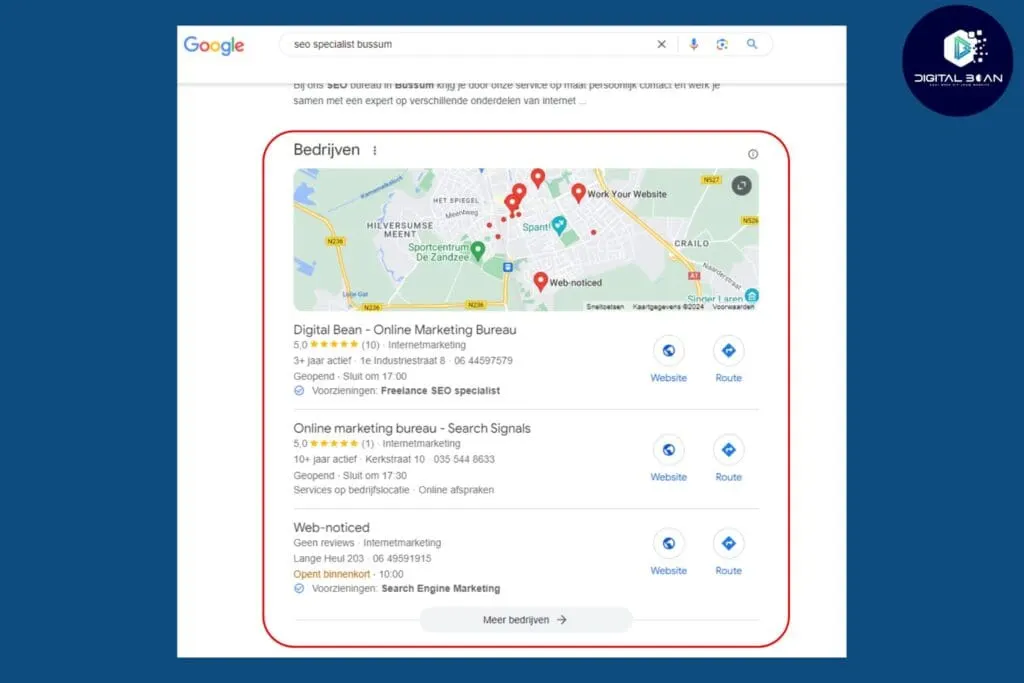
Local SEO means optimising your online presence to get found more easily in local search results and on Google Maps. It focuses on specific geographic terms and improves visibility for businesses with a physical location, or that offer services in a particular area, helping them get found by local consumers.
It consists of the following components:
- Local keywords: Use keywords that specify your location and what you offer. These aren't generic terms like "best coffee", but more targeted terms like "best coffee bar Manchester".
- Local backlinks (link building): These are links from other local businesses' websites, the press (think local newspapers or council websites), or local directories that point to your website. They don't just strengthen your local search results, they also build trust within your community.
- Google Business Profile (GBP): This is your new online business card. By fully filling in your GBP profile and updating it regularly, you help Google understand who you are, what you do, and where you're based. That way, Google can show you correctly for the right terms, and people can get in touch with you more easily.
Why Do Local SEO?
Local searches lead to action: Statistics show that local searches often lead to a store visit or purchase within 24 hours. People searching locally are often ready to take action.
Almost half of all searches have local intent, according to this article!
Less competition: It's easier to stand out in local search results than to fight for a spot in the national results. Less competition means a bigger chance of getting noticed by potential customers.
92% of searchers choose businesses that appear on the first page of local search results, according to these statistics!
Building trust and credibility: Positive reviews and visibility in local papers and directories build trust with potential customers. People often trust local businesses over faceless online entities.
How Does Local SEO Work?
Local SEO helps Google decide when your business should appear in search results and on maps, depending on what someone is searching for and where they are. Here are the three main factors Google uses:
- How relevant the business is to the search: This looks at whether your business offers what someone's trying to find. If your business profile closely matches someone's search, you're more likely to show up in the results. Makes sense, right?
- Distance from the user: Google looks at how close your business is to the searcher, or to the place they mentioned in their search. If your business is nearby, you've got a better chance of appearing at the top.
- Prominence and reputation: This is about how well-known or popular your business is, both online and offline. Google looks at things like how often your business is mentioned online. The more mentions, the higher your visibility in the search results.
In short: if you want your business to stand out in local searches, it needs to be relevant to the search terms, located close to potential customers, and well-known and well-reviewed online.

Who Is Local SEO Useful For?
Local SEO isn't just a buzzword; it's a core part of the marketing strategy for almost any business with a physical footprint, or that offers services in a specific area. Here are the most common examples of who benefits from local SEO:
Small Local Businesses
If you run a small business, such as a bakery, coffee shop or bookshop, local SEO can make sure you get found when people nearby search for what you offer. This also applies to medium-sized businesses looking for a steady stream of new customers.
Businesses With Multiple Locations
For businesses with branches in multiple towns or regions, local SEO matters a great deal for making each location visible in its own local searches. This helps promote both the overarching brand and the individual locations.
Service Providers
Whether you're a plumber, a lawyer or a personal trainer, if you offer services in a specific area, you want local customers to be able to find you. Local SEO helps you reach the top of the search results when someone in your region searches for your services.
Medical Professionals and Practices
Doctors, dentists, physiotherapy practices and other healthcare professionals often depend on local patients. Local SEO makes sure your practice gets found by people who need specific health services nearby.
Restaurants and Bars / Clubs
With people often searching for "restaurant near me" or "best bars in [city]", local SEO is a no-brainer for this industry. It doesn't just help attract new customers, it also strengthens your presence within the local community.
In short, every business benefits from being found well locally! But how do you recognise local keywords? That's what we'll cover next!

What Are Local Keywords?
Local keywords are specific terms people use when searching for products, services or information in a particular geographic region.
These keywords often include place names or terms like 'nearby', 'near me', or references to specific neighbourhoods or landmarks.
But it can also be as simple as 'bakery' on its own, which also carries a high local search intent.
The goal of local keywords is to narrow the search results down to what's available in the searcher's immediate area.
7 Local SEO Tips for Getting Found Locally!
To help you get started, we've written down the 7 local SEO tips that make the biggest impact. Good luck optimising! Check out the SEO tips below:Tip 1: Claim Your Google Business Profile and Optimise It
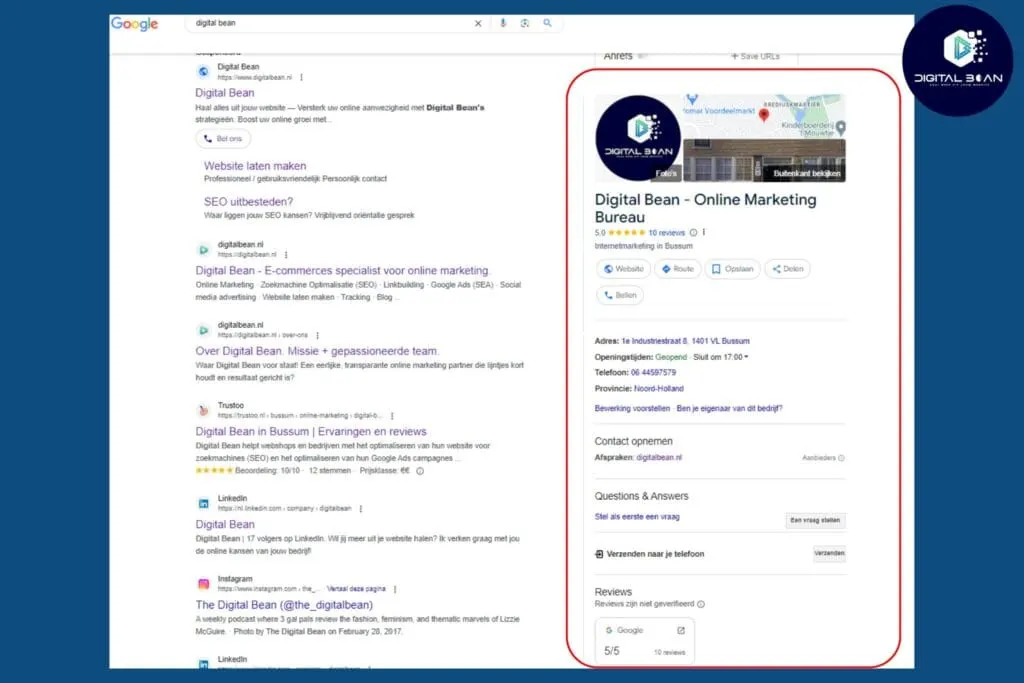
Start by claiming or creating your Google Business Profile (click here to get started). This matters a lot! Fill in all the information completely:
- Business name: The official name of your business. You can work a keyword into this too. For example 'Bean IT – Cyber Security'
- Category: The type of business you run, for example restaurant, hairdresser, law firm, etc. Don't forget to fill in the subcategories too.
- Location: The physical address of your business, including street name, city, county, postcode and country. Obviously very important!
- Phone number: The number customers can use to reach you.
- Website URL: The URL of your business website.
- Opening hours: The days and times your business is open.
- Special hours: Temporary opening hours for holidays or special occasions.
- Attributes: Specific features of your business, such as Wi-Fi availability, wheelchair accessibility, etc. Only relevant if you have a physical location.
- Services: A list of the services your business offers.
- Products: A list of the products your business sells.
- Photos: Photos of your business, including the interior, exterior, team members and products/services.
- Videos: Videos showcasing your business and the products or services you offer.
- Reviews: Ratings and reviews from customers about your business.
Update it regularly, and don't forget to fill in your business description. This is a good place to work in your main search term too, for example 'online marketing agency Manchester'. 😉 But don't overdo it, one or two mentions is enough.
Tip 2: Create Separate Pages for Local Search Terms
Create separate pages for the local search terms you want to rank for. Take your main keyword, 'online marketing agency' for example, and add the local term onto it, 'online marketing agency Manchester' in this case.
Make sure the local search term is included in the following:
- Title
- URL
- Meta description
- In the content of the page, think H1, H2, etc, but also just naturally throughout the text.
This already gives you a much better chance of ranking higher in the organic search results!
Tip 3: Create Local Content Around Your Business Activities
Create SEO content that genuinely resonates with your local audience while showing off your expertise, so you build trust quickly.
Think of blog posts about local events, collaborations with other local businesses, or guides relevant to your city or region.
This way you can share new developments or projects your business is working on, which are interesting and engaging for the local population and future customers.

Tip 4: Try to Get Links From Local Press and Directories
Backlinks (links from other sites) are still a powerful factor for SEO. Try to get links from respected local websites such as newspapers, schools, or council pages. This boosts not just your credibility, but also your local ranking.
You can earn these when you've done a nice collaboration with another business or school, signed a sponsorship deal with a local sports club, taken part in an event, or done something else newsworthy.
Tip 5: Get Plenty of Reviews!
Think about it yourself: when you're choosing a plumber or another business, what do you look at to make your decision? Most likely, the reviews! Your customers do the same.
Lots of positive reviews create 'social proof': the idea that because other people have already trusted you and had a good experience with your business, there's a good chance the same will be true for them. Reviews are one of the most powerful ways to build trust and ultimately get people to convert or buy!

Tip 6: Optimise for Voice Search Too
These days, "hey Google" or "hey Alexa" has become completely normal, and is used a lot to search for things. That includes plenty of local search terms too, like "what's the nearest lunch spot"
Optimise for voice search and local 'near me' searches. Think about how people speak, not just how they type. There's a lot of potential customers to gain here.
Here's how to optimise for voice search:
- Conversational keywords: Use natural, conversational keywords that people are likely to use during voice searches. Instead of "best Italian restaurant London", a conversational keyword would be: "What's the best Italian restaurant near me?"
- Long-tail keywords: Focus on long-tail keywords and questions that are more specific, since voice searches tend to be longer than typed searches. (Read more about long-tail keywords here)
- Local optimisation: Make sure you include local keywords and locations, since many voice searches are aimed at local information such as "Where's the nearest restaurant?"
- Answer snippets: Try to become the Featured Snippet by giving direct answers to frequently asked questions in your content, since voice assistants often read this information aloud to users.
- Natural language: Write content in natural, understandable language that's easy for voice assistants to speak and understand.
This way you also reach people searching through their smart speaker, car assistant or phone assistant, and tap into the growing trend of voice-based search.

Tip 7: Keep Your Name, Address, Phone Number and Contact Details Consistent Across the Web
Make sure your contact and name and address details, such as your business name, address and phone number, are consistent everywhere you appear online. Whether it's your website, social media or other online platforms, it matters that people always see the same information about your business.
This doesn't just help search engines understand where you are and what you do, it also makes it easier for customers to find you and get in touch.
And when people see that you're consistent, that builds trust too. So double-check your details across all your online listings and make sure they're correct everywhere.

Everything Summed Up
If you run a small or medium-sized business, a local shop or restaurant, or work as a service provider, local SEO is indispensable for your success.
This form of online marketing makes sure your business stands out to nearby people searching for what you offer. It's the key to attracting targeted traffic to your website – people who are ready to buy and just need to find the right local provider.
How does this work in practice? First, make sure your business is correctly and fully set up on Google Business Profile, so you stand out on Google Maps and in local search results. Then optimise your website with keywords your local customers use, such as 'baker in Manchester' or 'plumber in Leeds'. Don't forget to regularly collect customer reviews, as good ratings build trust and attract new customers.
It's also a good idea to create content tied to local events or news. This shows your involvement in the community and improves your local visibility online.
Need help? At Digital Bean, we're ready with a motivated team to take your SEO off your hands. We build transparent, results-focused online marketing strategies, carried out with short lines of communication and complete honesty!
Book a short call to start getting found locally!
>> Book my call <<
Speak soon!