The Difference Between SEO and SEA and How They Strengthen Each Other.
 Matthijs BoonFounder and online marketer
29 November 2023 · updated 23 January 2025
What the real difference is between SEO and SEA? Or better yet, how can you combine them for explosive growth in your online visibility?
In this blog we'll explain what SEO and SEA are, how they differ and how they can support each other for fast online growth.
So keep reading and discover everything about SEO and SEA, plus how to get the most out of both.
In Short
- SEO improves your visibility in organic search results. It includes on-page
- SEA is about paid advertising in search engines. It offers instant visibility and targeting, mainly through platforms like Google Ads.
- SEO is a long-term strategy with lasting results and no cost per click, while SEA delivers immediate results but is paid per click.
- By using them together, such as sharing insights and keeping your branding consistent, you can achieve maximum online visibility.
What Is SEO?
SEO stands for Search Engine Optimisation.
It's the process of optimising your website so it ranks better in the organic search results of search engines like Google and Bing.
You use three pillars for this:
- Content (SEO copy, photos and videos)
- Technical SEO (load speed, mobile-friendliness and sitemaps)
- Link building (links from other websites)
These are the three main pillars of SEO, with all sorts of smaller tasks falling under each one.

Benefits of SEO
Now you might be wondering: “Why should I bother?” Well, here are a few benefits:
- Long-lasting results: Unlike paid ads, where you have to keep paying to stay visible, SEO offers long-lasting visibility. Once optimised, your site can keep ranking without you having to constantly invest.
- Credibility: People often trust organic search results more than paid ads. By ranking highly in the organic results, you build trust and credibility with your audience.
- Organic traffic: SEO attracts visitors who are actively searching for what you offer. This means a higher chance of conversion.
If all this sounds like a bit much, we're here at Digital Bean to help.
With years of experience optimising websites for search engines, we can help you grow your online visibility. Consider outsourcing your SEO to our team of experts.
Want to read more about SEO? Take a look at our SEO beginner's guide, where we walk you through what SEO actually is, from start to finish, and everything that comes with it.
What Is SEA?
SEA. If you've ever searched on Google and seen an advert at the top of the results, you've already come across SEA. But what exactly is it, and why is it so powerful?

To give you a bit of an idea, SEA is basically a fast lane to traffic. You pay X amount for the clicks, and you get instant traffic to your website.

Definition and Basic Principles of SEA
SEA, or Search Engine Advertising, is the process of buying advertising space on search engines. (As you can see in the first image above.)
Instead of waiting to appear organically at the top of the search results (that's where SEO comes in), with SEA you can buy a spot right at the top instantly.
The most popular platform for SEA is Google Ads. Here you can create ads that appear when someone searches for specific keywords you've chosen.
Want to know more about the finer details of SEA? Dive into our in-depth article about what SEA actually is.
Benefits of SEA
Now you might be wondering: “Why would I pay for traffic if I can get it organically too?” Good question! Here are a few benefits of SEA:
- Instant traffic: As soon as your ad goes live, you can expect instant traffic to your website. You don't have to wait months for SEO to start working.
- Precise targeting: With SEA you can target specific audiences based on demographics, interests, location and much more. This means your ad is only shown to people who are interested.
- Visibility at the top of the search results: With SEA you're at the top. Literally. Your ad appears above the organic search results, giving you maximum visibility.
For me, as someone who's been in online marketing for years, SEA has proven time and again to be a powerful way to help businesses grow faster.
I haven't just done this for clients, but for my own projects too.
If you're considering using SEA for your business but aren't sure where to start, consider outsourcing it to specialists. At Digital Bean we can help you with your SEA strategy.
What Is the Difference Between SEO and SEA?
So what exactly is the difference between SEO and SEA? If you're considering doing SEO or SEA, you've probably wondered this at some point. So let's take a look.
Cost
- SEO: Generally speaking, the initial cost of SEO is lower than that of SEA. You don't pay for clicks or impressions. That said, optimising your website and creating quality content does cost time, effort and money. But remember, once you have a solid position in the organic search results, there are no recurring costs per click.
- SEA: Here you pay directly. Every time someone clicks your ad, it costs you money. This is also known as pay-per-click (PPC). Costs can vary depending on competition and the quality of your ads. But the upside is you appear at the top of the search results straight away, driving instant traffic to your site.
Sustainability
- SEO: This is a long-term strategy. It can take months before you reap the rewards of your efforts, but the results tend to be more durable and lasting.
- SEA: As soon as you stop paying, your ads disappear, and so does your traffic. It delivers fast results, but it doesn't build anything for the long term.
Results
- SEO: Organic results feel more credible to searchers and often get more clicks than paid ads. But it takes time and patience to get there.
- SEA: You see results straight away. As soon as your campaign goes live, you can start generating traffic and conversions.
Approach
- SEO: This is about quality content, backlinks, site optimisation and user experience. It's an ongoing process of optimising and adjusting that never really stops.
- SEA: This revolves around bidding strategies, ad copy, landing pages and audience targeting. You need to constantly monitor and optimise your campaigns for the best ROI.

Now that you know the differences, you might be wondering which approach is best for you. Or how to use them together for maximum impact. Keep reading to discover what makes the two of them so strong together.
How SEO and SEA Strengthen Each Other
In the online marketing world, I often see the discussion pop up about which strategy is best: SEO or SEA? Honestly, I find it a bit of a pointless debate.
Because what if I told you they're not opposites, but actually go hand in hand? Let's take a closer look at how these two strategies work together.
Combined Strategy for Maximum Visibility
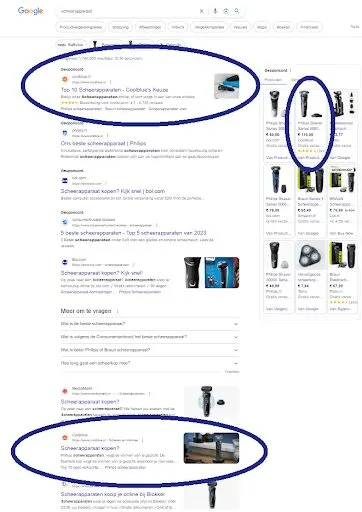
To start with, when you combine SEO and SEA, you create a double presence in the search results.
Picture this: your ad appears at the top of the page, and your organic result appears a few lines below it.
This doesn't just increase the chance that someone clicks your link, it also strengthens your brand recognition. And if you're wondering what you need for this?
A well-optimised website for SEO and a well thought-out advertising strategy for SEA. That's what you need for maximum visibility.
Take a look at the example below. The more prominent you are, the faster people will click your link and recognise your name.
SEA for Immediate Results and SEO for Long-Term Growth
SEA gives you the ability to be instantly visible to your audience. Got a new offer or a limited-time promotion? SEA makes sure you're at the top of the search results right away.
On the other hand, SEO offers sustainable growth over the long term. It's like planting a seed that eventually grows into a strong tree with deep roots that isn't going anywhere.
I experienced this myself with one of my first projects. By using SEA, I got instant traffic, while my SEO strategy made sure I was still getting traffic months and years later.
Using SEA Data for SEO Optimisation, and Vice Versa
One of the biggest advantages of SEA is the wealth of data you get. Which keywords convert best? Which ad copy grabs the most attention?
These insights are worth their weight in gold for your SEO strategy. At the same time, your organic traffic can tell you which keywords naturally perform well, so you can bid on them in your SEA campaigns.
On top of that, Google Ads has handy search term reports that show you which search terms your ads have shown up for. These reports can, in turn, give you inspiration for your SEO.
Lower CPCs in SEA
Here's the great part: the better your website is set up technically for SEO, the better it answers the searcher's search intent.
Within SEA, the better the page matches the ad, the less you pay. That's because the quality score of your ads goes up.
That means you pay lower click prices and can buy more traffic for the same money, generating more revenue and making your SEA campaigns perform better.
The Importance of Consistency in Branding and Messaging Across Both Channels
Consistency is key. Whether you're creating a paid ad or writing a blog post, make sure your message and branding stay consistent.
This doesn't just strengthen your brand identity, it also builds trust with your audience. And trust, as we all know, is the first step towards conversion.
Tips for Combining SEO and SEA
To help you combine SEO and SEA and get the most out of both marketing channels, I've listed a few tips for you below. This way, you can combine the channels and create solid online visibility.
1. Go for Double Visibility
Use the same keywords for both SEO and SEA to get double visibility on the search results page. This increases the chance that users click on one of your links.
2. Share Insights
Use data from Google Ads (SEA) to inform your SEO strategy, and vice versa. For example, if a particular keyword performs well in SEA, consider creating more SEO content around that keyword. The search term reports in Google Ads are great for this.
A little bonus tip is to build a DSA campaign for this. You can set this up to advertise on specific URLs, using Google's algorithm to advertise on keywords that are relevant to those pages.
This way, you can use the power of the algorithm to find out how to expand your website from an SEO perspective.
3. Consistent Branding
Make sure your ads (SEA) and organic results (SEO) share a consistent brand message and tone of voice. This strengthens brand recognition and trust with the user.
4. Test With SEA
Before investing in a long-term SEO strategy for a new keyword or market segment, you can test it first with SEA to gauge its potential.
Optimise landing pages: Make sure the landing pages you use for SEA are also optimised for SEO. This means relevant content, fast load times, and mobile-friendly design.
5. Use SEO Traffic as a Remarketing List
Remarketing lets you specifically target SEA ads at people who've previously visited your site through organic search.
This way, you can stay front of mind with your visitors and make sure they eventually buy a service or product from your website.
6. Negative Keywords
Use SEO data to find out which irrelevant search terms are bringing traffic to your site, and add these as negative keywords in your SEA campaigns.
This way you avoid spending money on terms that generate no revenue or leads at all, and make sure your campaigns perform better.
7. Stay Up to Date
Both SEO and SEA are constantly evolving. What works today might not work tomorrow. Stay up to date with the latest trends and updates in both SEO and SEA.
Conclusion
Combining SEO and SEA isn't just a smart strategy, it's a necessary one. Together they offer a powerful combination for maximum online visibility.
By combining the strength of organic and paid search results, you can benefit from instant traffic, sustainable growth and stronger brand recognition.
At Digital Bean, we have the expertise and experience to help you bring these two channels together smoothly.
Whether you're just starting out or already have an established online presence, there are always ways to grow and optimise.
Click below and get in touch to see how we can bring your SEO and SEA campaigns together!