7 SEO Title Tips to Make Your Titles Irresistible!
 Joram BoonSEO and content specialist
3 July 2024 · updated 4 July 2024
Titles matter! They need to make people curious at a glance, tell them what the page is about, and be SEO optimised at the same time. Damn tricky!
Maybe you’re already ranking in the top 3 of the search results, but visitors just aren’t showing up. Sound familiar? It might be because you don’t have an irresistible SEO title that people want to click on. Annoying, and pretty frustrating to see…
Luckily, there’s a solution! In this blog post, I’ll give you 7 SEO title tips for creating rock-solid titles. These tips make your titles super appealing to both search engines and people. This gets you more clicks, more visitors, and helps you get the most out of your online store SEO.
Read on and make your SEO title tags irresistible!
What Is an SEO Title?
An SEO title, also known as a title tag or meta title, is a special title you give a web page to help search engines like Google find and understand your page better. This title matters a great deal, because it’s the first impression people get when they see your page in the search results.

Why Does the SEO Title Matter So Much?
- Helps Search Engines Understand the Page: A good SEO title helps search engines like Google understand your page and place it better in the search results.
- More Clicks (CTR): An appealing SEO title grabs the attention of people searching on Google. If your title stands out, more people will click on it.
- Creates a First Impression: The SEO title is often the first thing people see of your website. A good title sparks curiosity, taps into human emotions, and makes people want to visit your page.
Now that you know what an SEO title is and why it matters so much, let’s look at some concrete SEO tips for creating irresistible titles. Below you’ll find 7 tips for rock-solid titles…
7 Tips for Catchy Titles People and Search Engines Can’t Resist!

Tip 1: Put the Keyword as Early as Possible
The first thing you need to know about creating a good SEO title is that you should put your most important keyword as early as possible. Why does this matter? Here are a few reasons:
Search Engines Understand It Better: Search engines like Google read titles from left to right, just like we do. If your keyword is at the start of the title, search engines immediately understand what your page is about.
People See It Faster: When people scroll through the search results, they only have a few seconds to decide whether to click on your link. If your keyword is at the front, they immediately see that your page is relevant to what they’re searching for.
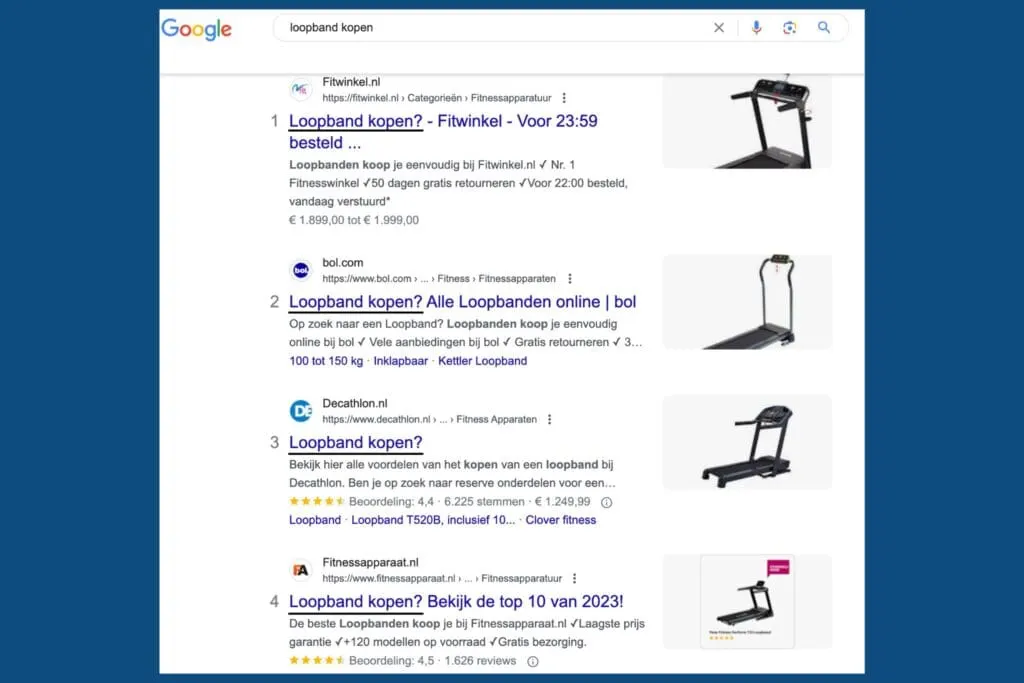
How Do People Look at Search Results?
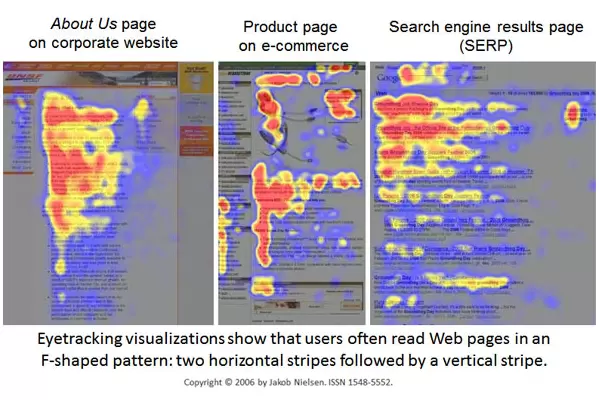
Research has shown that people often scan a web page in an F-shaped pattern. This means they first look horizontally along the top line, then move down a bit and look horizontally again, and then scan vertically down the left side of the page. This pattern resembles the shape of the letter F.
F-Shaped Scanning Pattern:
- Top Horizontal: People read the top line first, so your title needs to immediately make clear what your page is about.
- Middle Horizontal: They then look horizontally again, but a bit lower on the page, to get more information.
- Left Vertical: Finally, they scan vertically down the left side, picking up important keywords and bullet points.
Because people read this way, it really matters that your most important keyword is at the start of your title, and that you quickly convey the page’s value. More on that shortly…
How Does This Work in Practice?
Let’s take an example. Say you have an online store selling trainers, and you want to write a blog post about the best trainers for running. The most important keyword here is “best running trainers”.
Not optimal:
“Discover the benefits of the best running trainers”
Better option:
“Best running trainers: discover the benefits”
See the difference? In the second title, the keyword “best running trainers” is right at the front. The first one isn’t completely wrong, but it isn’t optimal, especially when you factor in the F-shaped reading pattern.
Tip 2: Spark Curiosity
One of the best ways to make your SEO title irresistible is by sparking curiosity. This means making the reader curious about what they’ll discover if they click on your link.

Here are a few concrete ways to do this:
- Ask a question: People love finding answers. If you ask a question in your title, they immediately want to know what the answer is. For example:
- “How do you get more customers with irresistible SEO titles?”
- “What are the secrets of successful e-commerce titles?”
- Use numbers: Numbers stand out and give a clear picture of what the reader can expect. For example:
- “5 ways to improve your titles”
- “10 tips for irresistible titles”
- Make promises: Tell the reader what they’ll get or learn. This can make them curious about the details. For example:
- “Discover how to create the perfect SEO title in 7 steps”
- “Learn the tricks for titles that generate clicks”
- Make it personal: Use words like “you” and “your” to address the reader directly. This makes the title more personal and engaging. For example:
- “Why your SEO titles aren’t working (and how to fix it)”
- “What you need to know about titles for your online store”
- Create a sense of urgency: Let the reader know they’re missing out on something important if they don’t click. For example:
- “Don’t miss these 7 SEO title tips!”
- “Improve your titles today with these simple tricks”
By sparking curiosity in your titles, you make people curious about your page’s content and increase the chance they’ll click.
Now that we know how to spark curiosity, let’s look at another important aspect of SEO titles: length. Let’s move on to the next tip!
Tip 3: Don’t Make Your SEO Title Too Long!
SEO titles play a major role in attracting visitors to your website. One of the most important things to keep in mind when creating an SEO title is its length. Here’s why it matters to keep your titles from getting too long, and how to reach the ideal length.
Why Your SEO Title’s Length Matters
- Search Engines Like Google Have Limits: Google only shows a certain number of characters in the search results. If your title is too long, it gets cut off, and visitors won’t see the full title. This can make your title less appealing and mean fewer people click on it.
- Clarity for the Reader: A short, concise title is easier to understand and grabs the attention of people scrolling through the search results faster.

What’s the Ideal Length for an SEO Title?
The ideal length for an SEO title is between 40 and 60 characters. This makes sure your title is fully visible in the search results while still containing enough information to be appealing and provide enough context.
This study by Backlinko (well-known SEO blog) also found that titles between 40 and 60 characters performed best on click-through rate!
Tips for Creating a Short and Powerful SEO Title
- Keep It Simple: Use clear and simple words. Avoid jargon and complex terms.
- Use Numbers: Titles with numbers often attract more attention. For example: “5 tips for the perfect SEO title”.
- Avoid Unnecessary Words: Cut redundant words that don’t add any value to your title.
- Use Powerful Words: Words like “discover”, “best”, “must-have” can make your title more appealing.
- Check the Length: Use the Yoast SEO plugin to check the length of your title.
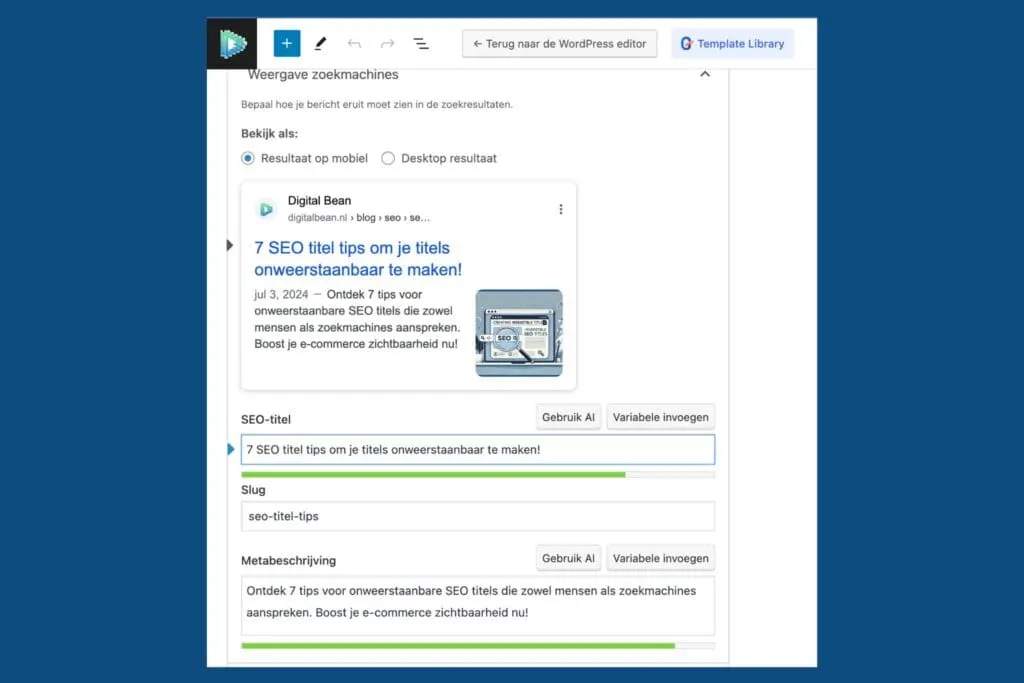
Example of a Short and Powerful SEO Title
Say you have an online store selling shoes.
A long title like “Buy the best and most comfortable running shoes for women at our online shop now” will get cut off in the search results and isn’t appealing to users either.
A better option would be: “Best Running Shoes for Women – Comfortable & Affordable”. Much shorter, keyword at the start, and all the information is still there.
Now that you know how to optimise the length of your SEO titles, you’re one step closer to creating irresistible titles. But length isn’t the only thing that counts. In the next tip, we’ll look at how to analyse and improve your competitors’ titles to get even better results!
Tip 4: Steal and Improve Titles
A good way to create irresistible SEO titles is to look at what your competitors are doing and improve on it. This might sound a bit cheeky, but it’s a smart strategy that a lot of marketers use. Here’s how you do it:
Step 1: Find Your Competitors
Start by finding your most important competitors. These are businesses offering the same products or services as you. Use tools like Ahrefs, SEMrush, or just a quick Google search to see which websites rank highly for your most important keywords.
Step 2: Analyse Their Titles
Look at the titles your competitors use. Note down the titles that rank highly in the search results. Pay attention to how they use their keywords, which words they use to spark curiosity, and how long their titles are. Here are a few questions you can ask yourself:
- Is the keyword at the front of the title?
- Does the title spark curiosity?
- Is the title short and punchy?
Remember that the search results reflect what people actually want to see. This means that if a title ranks highly, it’s probably one that appeals to a lot of people and that they click on. By analysing these titles, you can learn what works and what doesn’t.
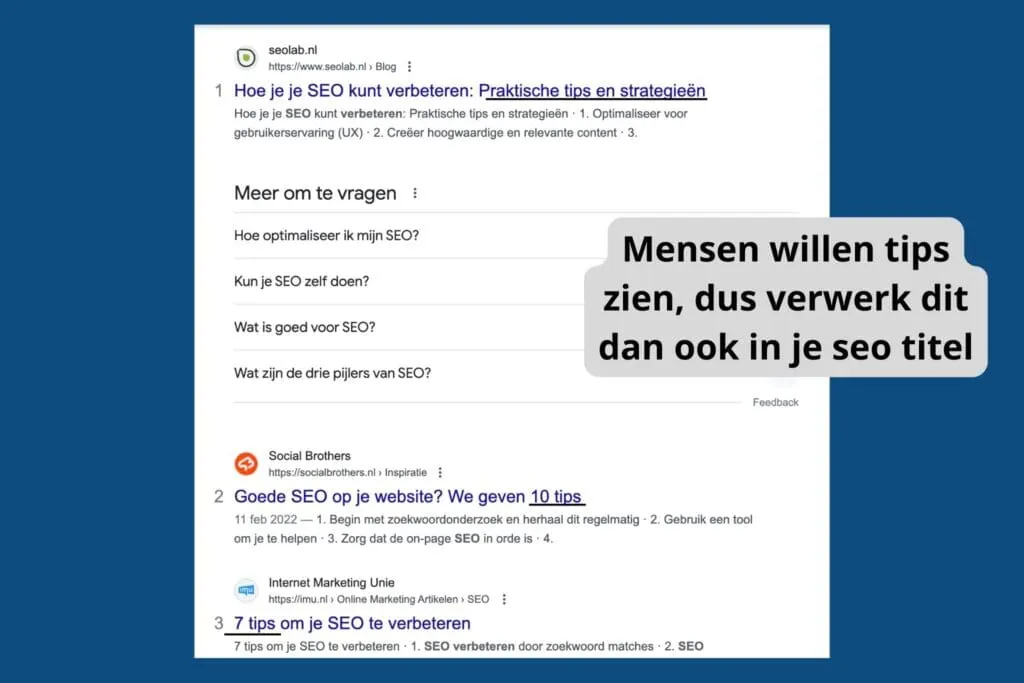
Step 3: Improve Their Titles
Now comes the fun part: improving the titles. You can do this by:
- Moving the Keyword Further Forward: Put the keyword right at the front if that’s not already the case.
- Adding More Curiosity: Add words or phrases that make readers curious. For example, change “The best SEO tips” into “Discover the 10 best SEO tips experts use”.
- Making the Title Shorter and More Punchy: If the title is too long, try to shorten it without losing the key information. For example, instead of “How you can create better SEO titles for your blog posts”, you could say “Creating better SEO titles: here’s how”.
Example…
Say your competitor has the title: “Tips for better SEO titles you need to know”. You can improve this by:
- Putting the keyword at the front: “SEO titles: 7 tips you need to know”
- Adding more curiosity: “SEO titles: the 7 tips you need to know”
- Making the title more punchy: “SEO titles: 7 must-know tips you can’t miss”
Step 4: Test and Adjust
After improving the titles, test them on your own website. See which titles perform better in terms of clicks and traffic. Keep experimenting and adjusting to get the best results.

Now that you know how to steal and improve titles, it’s time to learn how to adapt your titles to the type of page. This makes sure your titles are always relevant and appealing, wherever they appear on your website. Read on to find out how…
Tip 5: Adapt the Title to the Type of Page
It’s important to know that different types of web pages serve different purposes. That’s why the titles of these pages should differ too. Here’s how to adapt your titles based on the type of page:
1. Blog Pages
- Goal: Inform or entertain.
- Title Strategy: Use words that spark curiosity and show there’s valuable information to be found, as well as what that information is.
- Example: “Everything you need to know about SEO title tags in 2024”

2. Product Pages
- Goal: Boost sales and give enough information about the product.
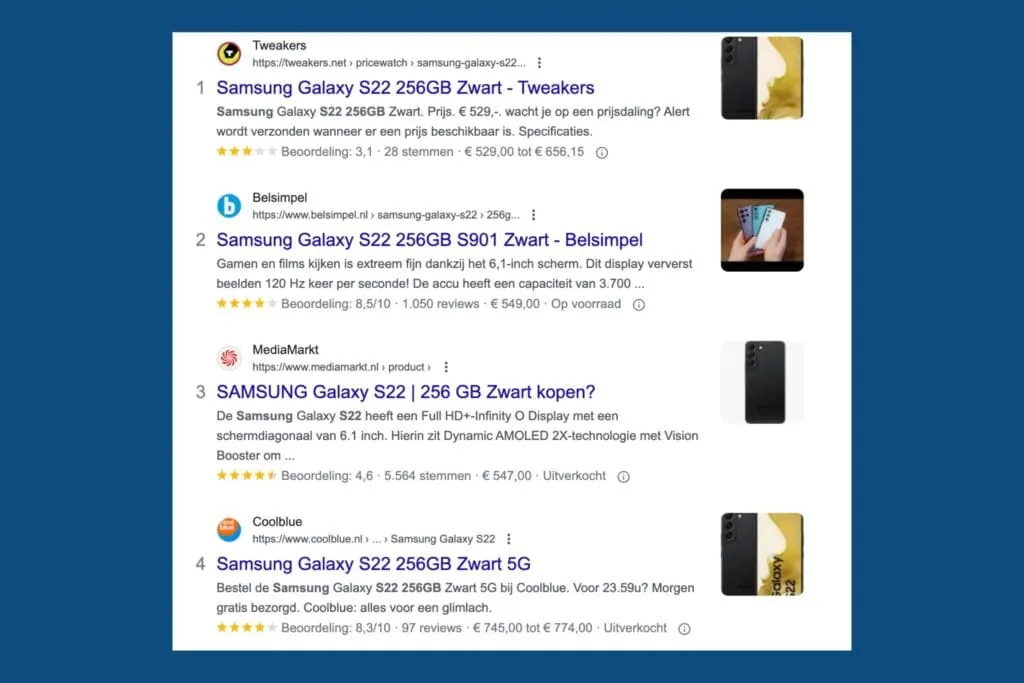
- Title Strategy: Use the product name and key features. Also add a reason why this product is special, when that makes sense. The format usually looks like this: [Brand] [Product name] [feature 1] [feature 2]
- Example: “Samsung Galaxy S22 – 48 Hour Battery – 256GB”
3. Category Pages
- Goal: Present broader product groups.
- Title Strategy: Keep the title broad and descriptive. Focus on the type of products and a key benefit.
- Example: “Laptops for Students – Affordable and Reliable”

Tip 6: Highlight the Page’s Value Quickly
When writing an SEO title, it really matters to immediately make clear what the page’s value is. People often have little time and want to know quickly why they should click on your link. If you communicate your page’s value quickly, you give people a reason to click through, and they’ll be much more likely to do so faster!

4 Ways to Highlight Value in Your Title
Here are a few simple tips for quickly communicating your page’s value in your SEO title:
- Use Clear and Descriptive Words:
- I’ll keep saying this… Tell people immediately what they can expect. For example, if you have a guide about “10 ways to improve your SEO,” make sure that’s clear in the title.
- Example: “10 Simple Tips to Improve Your SEO” is much clearer than a plain title like “Improve SEO,” which is the primary keyword.
- Highlight the Benefit for the Reader:
- Show what the specific benefit is. Why would someone visit your page? What do they learn or get that makes their life easier?
- Example: “10 Tips to Improve Your SEO and Get More Traffic” clearly states the benefit (more traffic).
- Be Specific and Concrete:
- Avoid vague words. Give specific numbers or results people can expect.
- Example: “How You Can Improve Your SEO in 30 Days” gives a clear timeline and goal.
- Add a Unique Value:
- What makes your page different from the rest? Add something unique that sets you apart from others.
- Example: “10 Free SEO Tools to Improve Your SEO” offers unique value by highlighting that the tools are free.
Catchy Title Examples:
- “Catchy Title Examples: Inspire Your Followers With These Titles”
- “SEO Title Example: Best Practices for E-commerce Websites”
- “SEA, What Is That? 5 Reasons Why SEA Is a Must for Online Success!”
By quickly communicating the page’s value, you make sure people understand what to expect and why it’s worth clicking on your link.
This doesn’t just boost your click-through rate, it also increases the chance visitors will stay on your website longer and explore other pages, because you’re honestly communicating what they’ll find on the page.
Tip 7: Create Unique Titles for Every Page
It’s super important to create a unique SEO title for every page on your website. But why does this matter so much? Let’s explain it simply.
- Preventing Duplicate Content: If multiple pages have the same title, Google can get confused. Google won’t know which page is more important, and that can cause your website to rank worse in the search results.
- Preventing Keyword Cannibalisation: This means your own pages compete with each other for the same keywords. This can result in neither page ranking well, because they’re both fighting for the same spot.

Using Yoast SEO for Automatic Titles
Yoast SEO is a handy tool you can use to generate automatic titles. With Yoast SEO, you can set up preset titles that automatically insert keywords and other variables. This makes it a lot easier to create unique titles without spending much time on it.
- Setting Up Preset Titles: In Yoast SEO, you can create templates that automatically fill in the title with the keyword and other information.
- For example: you can create a template like “Buy %_title% at %_sitename% with free shipping”. This would then automatically become “Buy Black Trainers at YourOnlineStore with free shipping”.
This way, you don’t have to come up with a completely new title for every single page, but you still get a unique title for each one.
It’s worth mentioning that this doesn’t apply to blogs. Blogs need more attention to create a compelling title.
This way of generating titles is mainly handy for product and category pages.

Tip 7: Proven Copywriting Title Formulas + Catchy Title Examples
A good title can be the difference between a click and being ignored. Here are five proven formulas for catchy titles that you can easily fill in and use.
1. How to [Do Something] in [#] Simple Steps
- Explanation: People love clear step-by-step plans. These titles promise that something difficult becomes easy with a few simple steps.
- Example: “How to write the perfect SEO copy in 5 simple steps”
- Why It Works: This title promises an easy-to-follow guide, which is especially appealing to people who don’t have much time and like following a clear step-by-step plan.
2. [Do Something] Like [This Expert] Without [This Downside]
- Explanation: This title promises that you can achieve something like an expert, but without the downsides that usually come with that achievement.
- Example: “Write catchy SEO titles like a pro without hours of research”
- Why It Works: It taps into the desire to do something quickly and easily, with the same results as an expert.
3. [#] Things I Learned While [Doing Something]
- Explanation: These titles are based on personal experience and learning, which makes them authentic and engaging.
- Example: “10 things I learned while optimising my website for SEO”
- Why It Works: People are curious about personal stories and lessons they can apply themselves.
4. [#] Secret Ways to [Do Something]
- Explanation: The word “secret” sparks curiosity. People love learning insider tips and tricks.
- Example: “5 secret ways to improve your SEO ranking”
- Why It Works: This title promises valuable information that isn’t widely known, which makes it appealing to read.
5. [#] [Wild Adjective] Things You Need to [Do/Know] [Before/After] You [Do Something]
- Explanation: These titles use a strong adjective to grab attention and promise valuable insights or tips.
- Example: “7 surprising things you need to know before you create an SEO title”
- Why It Works: The strong adjective and the promise of important information draw the reader in.
To be completely honest, we obviously didn’t come up with these formulas ourselves, they’re frameworks for titles that have been proven for decades, and we learned these frameworks in a beginner copywriting course on Udemy. You can find the course here.
You’ll also notice these frameworks don’t take putting the keyword at the front into account, which is something to keep in mind. But usually, as long as the keyword is somewhere in the title, it’s fine. In the end, it also comes down to how well the page performs.
Now that you’ve seen some proven formulas for catchy titles, you might be wondering how to create these titles yourself without spending hours on it. Luckily, there are tools that can help you create effective title tags. Let’s take a look at some of these handy tools.
Tools to Help You Create Good Title Tags That Land
Coming up with a catchy title is sometimes super tricky! ‘Writer’s block’ is a well-known phenomenon among content creators, where you have no inspiration and can’t get a single word down. The following tools can help with that…
ChatGPT
ChatGPT is a great tool for creating catchy SEO titles. It uses AI and generates surprisingly good titles, especially if you give clear instructions. Here’s how to use it:
How Do You Use ChatGPT for SEO Titles?
- Go to the ChatGPT website: Open your browser and search for ChatGPT, or go to the OpenAI website.
- Enter your keywords: Type the most important keywords you want to use in your title. For example, “best laptops 2024.”
- Ask for title ideas: Ask ChatGPT for catchy title ideas. For example, “Can you help me with a catchy title for a blog about the best laptops of 2024?”
- Choose the best title: ChatGPT gives you several suggestions. Choose the one that best fits your article and target audience.

Benefits of Using ChatGPT:
- It quickly generates multiple title options.
- It helps you think creatively.
- It can work keywords into the title effectively.
- You can build on previously generated titles.
- You can give specific instructions to generate titles that fit exactly with your niche and target audience.
Ahrefs Blog Title Generator
Ahrefs offers a free tool specifically designed to help you create strong blog titles. The Ahrefs Blog Title Generator is user-friendly and can inspire you with plenty of creative title suggestions. Here’s how to use it:
How Do You Use the Ahrefs Blog Title Generator?
- Go to the Ahrefs Blog Title Generator: Search online for the Ahrefs Blog Title Generator and open the tool.
- Enter your keywords: Type the most important keywords for your article into the search bar. For example, “quick weight loss tips.”
- Review the generated titles: The tool gives you several title suggestions based on your keywords.
- Select the best title: Choose the title that’s most relevant and appealing to your target audience.

Why Use the Ahrefs Blog Title Generator?
- It’s free and easy to access.
- It offers plenty of creative, SEO-friendly titles.
- It helps you come up with new ideas quickly.
- Quickly get different styles of titles
- Super user-friendly and simple to use
Closing Words…
Creating irresistible SEO titles is easier than you think if you use the right tips and tools. By putting keywords at the front, sparking curiosity, and keeping an eye on the length of your titles, you can make sure both people and search engines love your titles. Don’t forget to create unique titles for every page and quickly show the value of your page.
Here are the key points to remember:
- Put your most important keyword at the front of the title.
- Make people curious with your title.
- Keep your titles short and punchy.
- Learn from your competitors and improve on their titles.
- Adapt your title to the type of page.
- Quickly show what your page’s value is.
- Create unique titles for every page.
Need help creating SEO titles, SEO content, or looking for help with your entire SEO?
Book a FREE call, where we’ll take a look at your current SEO situation and give you a few SEO tips right away that are specifically tailored to your online store.
Book your call here, and we’ll speak to you soon.
For now, see you in the next one…